
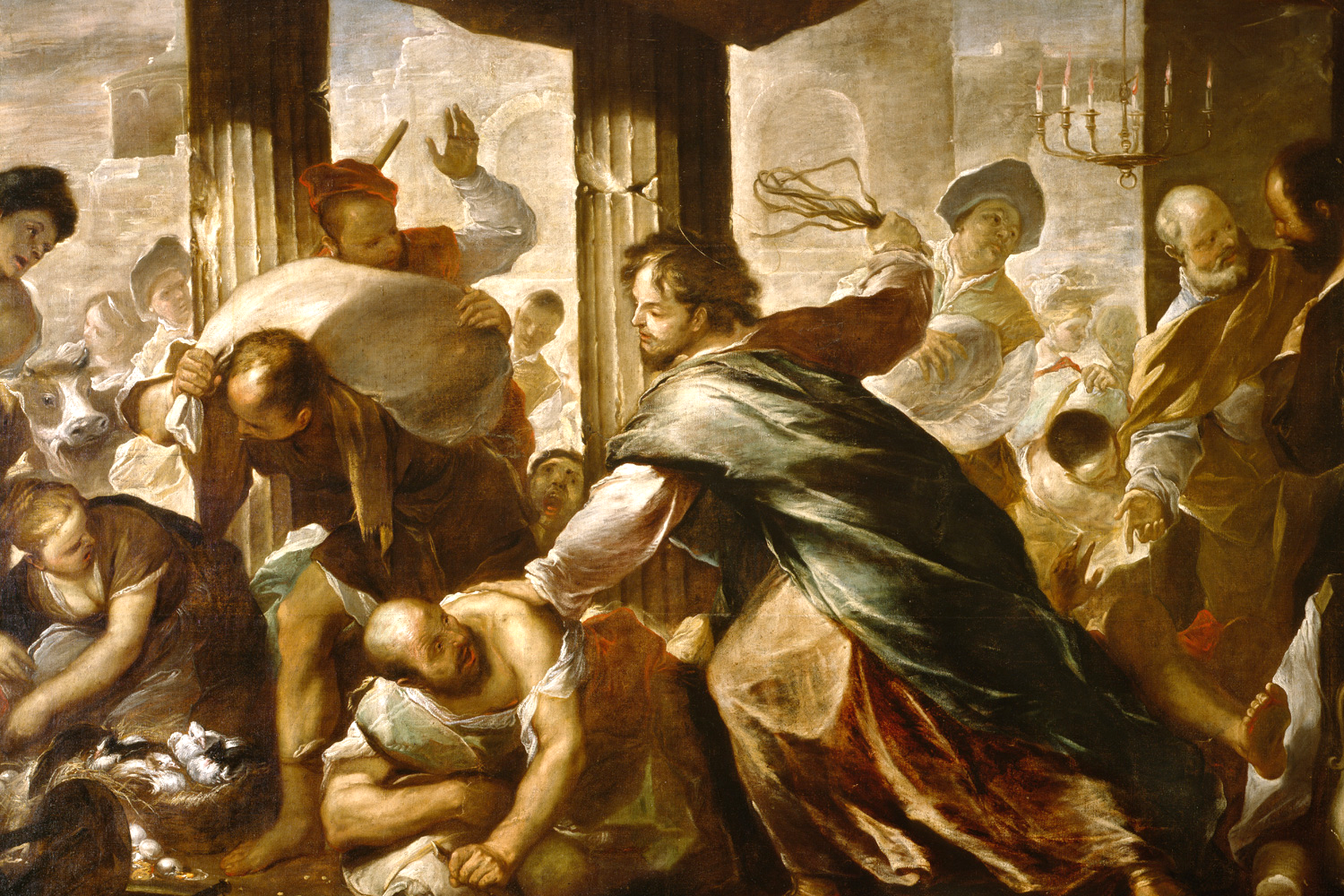
Luca Giordano, cir. 2nd half of 17th c.
Translation of the Holy Gospel According to Luke (19:41-47)
At that time, when Jesus drew near to Jerusalem, seeing the city, He wept over it, saying: If thou also hadst known, and that in this thy day, the things that are to thy peace: but now they are hidden from thy eyes. For the days shall come upon thee, and thine enemies shall cast a trench about thee on every side, and beat thee flat to the ground, and thy children who are in thee; and they shall not leave in thee a stone upon a stone, because thou hast not known the time of thy visitation. And entering into the temple, He began to cast out them that sold therein, and them, that bought, saying to them: It is written, “My house is the house of prayer, but you have made it a den of thieves.” And He was teaching daily in the temple.
A Message From St. Anthony of Padua’s Sermons: 10th Sunday After Pentecost, 10-11.
For the days shall come upon thee, and thy enemies shall cast a wall about thee and compass thee round and straiten thee on every side, and beat thee flat to the ground, and thy children who are in thee; and they shall not leave in thee a stone upon a stone; because thou hast not known the time of thy visitation. (Luke 19:43-44)
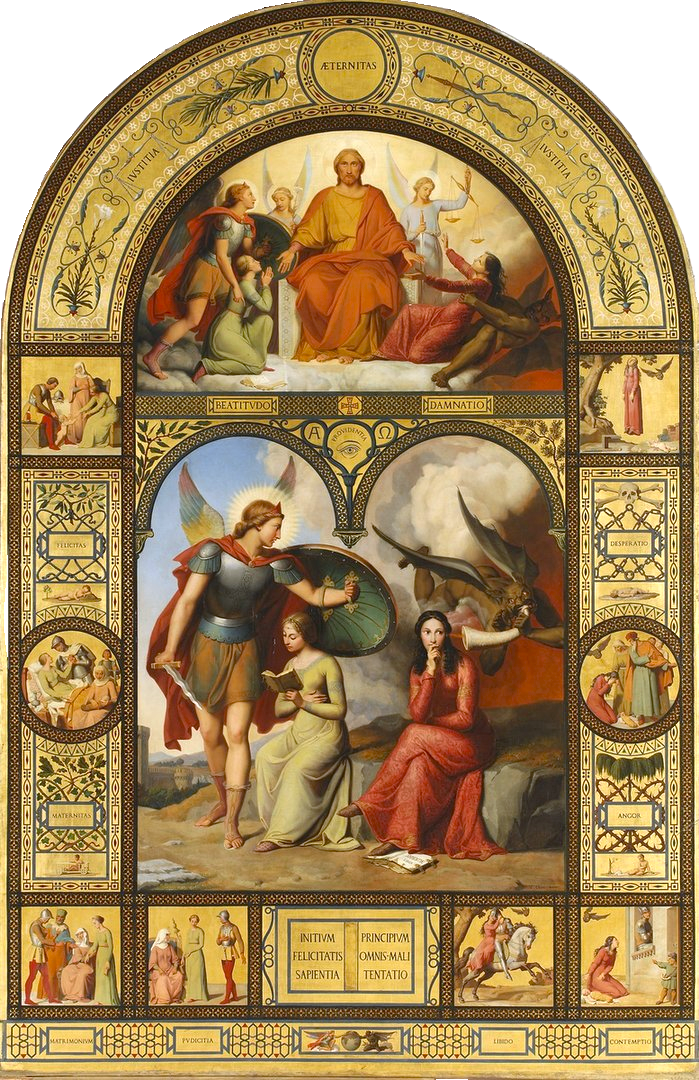
The time will come when the demonic enemies will cast a wall about souls as they leave their bodies, and drag them into the company of their own damnation. They will compass them round and straiten them on every side, when they reveal to their gaze the wickedness, not just of their deeds, but even their words and thoughts. They will beat them flat to the ground, when the flesh is reduced to dust. Their children will fall, when in that day all their thoughts shall perish (Psa 145:4); these thoughts are also signified by stones, when it goes on: and they shall not leave a stone upon a stone. When a wicked man caps a wicked thought with a worse one, he as it were lays a stone upon a stone; but when the soul is haled off to punishment, that structure of thought is demolished, and all because she did not know the time of her visitation. Sometimes God visits the wicked soul by precept, sometimes by punishment, and sometimes by miracles; but because she is proud and contemptuous, and is not ashamed of her wicked deeds, in the end she will be given up to her enemies, with whom she will be gathered in the eternal judgement of damnation. To explain why this unhappy outcome occurs, there is added: because thou hast not known the time of thy visitation.
Isaiah says:
The ox knoweth his owner and the ass his master’s crib; but Israel hath not known me, and my people hath not understood. (Isa 1:3)
The ‘ox’ is the thief who bore the cross as an ox bears the yoke. He knew his owner when he said: Remember me, etc. (Luke 23:42). The gentle ass is the Gentile centurion, who said; Indeed this was the Son of God. But Israel (the clergy) does not know; and the people (the laity) do not understand.
There is a concordance to this in Ecclesiastes, towards the end, where it says: Remember thy Creator in the days of thy youth, before the time of affliction come, and the years draw nigh of which thou shalt say; They please me not.… (Ecc 12:1-7)
O city of Jerusalem, O soul created according to the likeness of God, remember your Creator, who made you and who will judge you, in the days of your youth, the time more prone to sin and more acceptable for doing penance.
First he says:
Rejoice, therefore, O young man, in thy youth, and let thy heart be in that which is good. (Ecc 11:9)
In youth there is the ability to be useful; so remember, have in mind, before the time of your affliction comes- old age, death and judgement- and the years come of which you will say, They do not please me: remember in this your day what is to your peace, and what does please you. The days will come in which you will take no pleasure. You pleased yourself and displeased God; the days will come when you displease yourself. Remember, I say, before the light of the sun is darkened, before the brightness of worldly prosperity is overshadowed by the darkness of death; before the moon and the stars- the senses of the body- grow weak in old age and in death are altogether darkened. Isaiah says:
They shall look upwards, and they shall look to the earth: and behold trouble and darkness, weakness and distress, and a mist following them; and they cannot fly away from their distress. (Isa 8:21-22)
‘Trouble’ is in the devil’s suggestions; ‘darkness’ is in the blinding of the mind; ‘weakness’ is in the performance of works; ‘distress’ is in custom; and the ‘mist following’ is the hell of damnation. (Alternatively: there is ‘trouble’ in this life; ‘darkness’ in old age; ‘weakness’ in sickness; ‘distress’ in the sending forth of the soul; and the ‘mist following’ in the assaults of the demons).
So, Remember your Creator. And the clouds return after rain. The clouds are preachers, who pour down rain when they announce to a soul the bondage of its damnation. They recede when he refuses to believe them, and return when what they have announced is fulfilled. When the keepers of the house shall tremble. In this text, Solomon speaks in a mixed way: now of old age, now of the death of a man; but from this point up to the words, before the silver cord be broken, he is speaking of old age which is the herald of death.
The ‘keepers of the house’ are the ribs, which guard the inner parts and protect the delicate organs. In old age they ‘tremble’ and grow weak. The ‘strong men’ are the legs which support the whole body, which stagger and totter. The ‘grinders’ grow idle when the teeth grow weak and unable to chew food. ‘They that look through the holes’ are darkened when the eyes grow dim. They ‘shut the doors in the street’, because old men who cannot walk must stay at home; and they shut the doors so as not to see the games of the young- they cannot bear to look at things like that. The ‘grinders’ voice’ is low, because their senses are ageing, their voice is low and weak, and they cannot get, or even chew, their food by their own efforts. They rise up at ‘the voice of the bird’ (the cock) because as their blood chills they find themselves unable to sleep as they did before. The ‘daughters of music’ grow deaf, because in extreme old age the ears, which used to enjoy music, can make out nothing, and grow deaf.
They fear higher things. Old people are afraid of heights as their knees fail, and they are afraid in the way even on level ground, in case they fall. The almond-tree flourishes as their hair grows white, and the locust is made fat as their legs swell. Just as the locust has a fat stomach, so the lower parts of the old swell up. The caper-tree is destroyed, because lust cools as the sexual organs grow impotent. The caper has a strong effect on the kidneys, and because lust also controls the loins, it is signified by the caper. Man goes into the house of his eternity as he fails, and falls into the earth, and the mourners go round about in the street, as his friends and family accompany his corpse with lamentation. See how great your misery is, O man. Why, then, are you proud?
There follows a description of death. Remember your Creator before the silver cord of continued life is broken; and the golden fillet, the soul which is the most precious part of man, shrinks back whence it came. And the pitcher is crushed (the pitcher being man, made of earth), and the wheel (also man, ever turning in the circle of the world). He is broken at the fountain and upon the cistern when, destroyed by death, he lets go of the waters of desire which he had drawn from the well of worldly vanity. The pitcher stands for cupidity. The Samaritan woman left her pitcher at the Lord’s preaching (cf. John 4:28). When a rich man dies amidst his riches, we can say that the pitcher is crushed at the fountain, because the wretch dies at the fountain of greed. The cistern is the amassing of riches; as Jeremiah says:
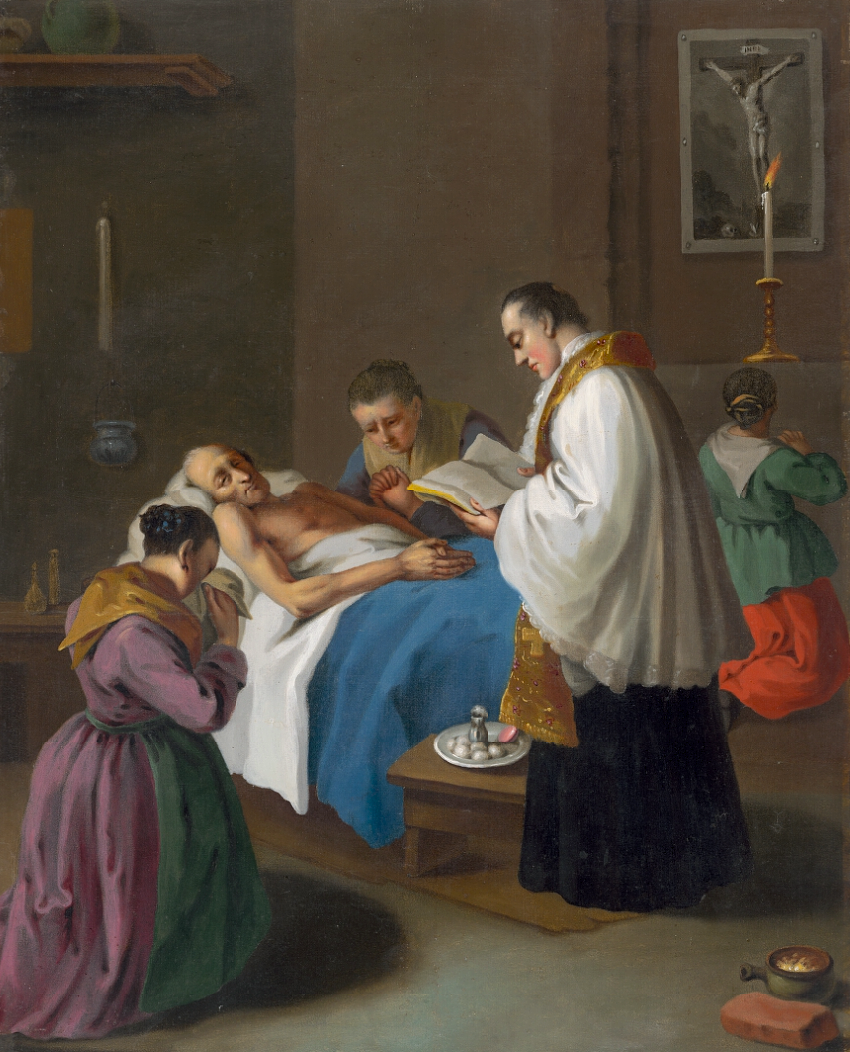
Pietro Longhi, after 1757
They have forsaken me, the fountain of living water, and have digged to themselves cisterns, broken cisterns that can hold no water. (Jer 2:13)
…
We beg you then, O Trinity and Unity, that when the days of affliction come, for the final return to dust and the breaking of the silver cord: the soul which you have made may return to you, and you will receive it; so that it may be freed from the assaults of the demons, and may desire to fly upwards into the glorious liberty of the children of God. Grant this, you who are blessed, God three and one, for ever and ever. Amen.