
Translation From the Holy Gospel According to Luke (14:1-11)
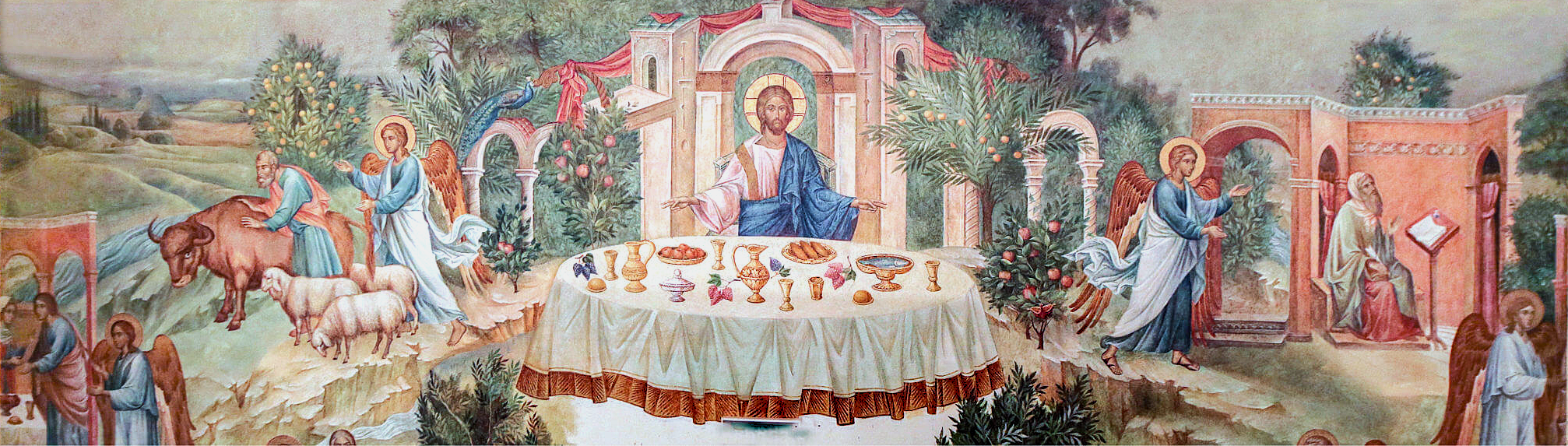
At that time, when Jesus went into the house of one of the chiefs of the Pharisees on the sabbath day to eat bread, they watched Him. And behold, there was a certain man before Him who had the dropsy: and Jesus answering, spoke to the lawyers and the Pharisees, saying: Is it lawful to heal on the sabbath day? But they held their peace: but He taking him, healed him, and sent him away. And answering them, He said: Which of you shall have an ass or an ox fall into a pit, and will not immediately draw him out on the sabbath day? And they could not answer Him these things.
And He spoke a parable also to them that were invited, marking how they chose the first seats at the table, saying to them: When thou art invited to a wedding, sit not down in the first place, lest perhaps one more honorable than thou be invited by him; and he that invited thee and him come and say to thee: Give this man place: and then thou begin with shame to take the lowest place. But when thou art invited, go, sit down in the lowest place: that when he who invited thee comes, he may say to thee: Friend, go up higher. Then shalt thou have glory before them that sit at table with thee: because every one that exalts himself shall be humbled, and he that humbled himself shall be exalted.
A Message From Pope Benedict XVI’s “Pastoral Visit to Loreto: Homily,” Sept. 2nd, 2007
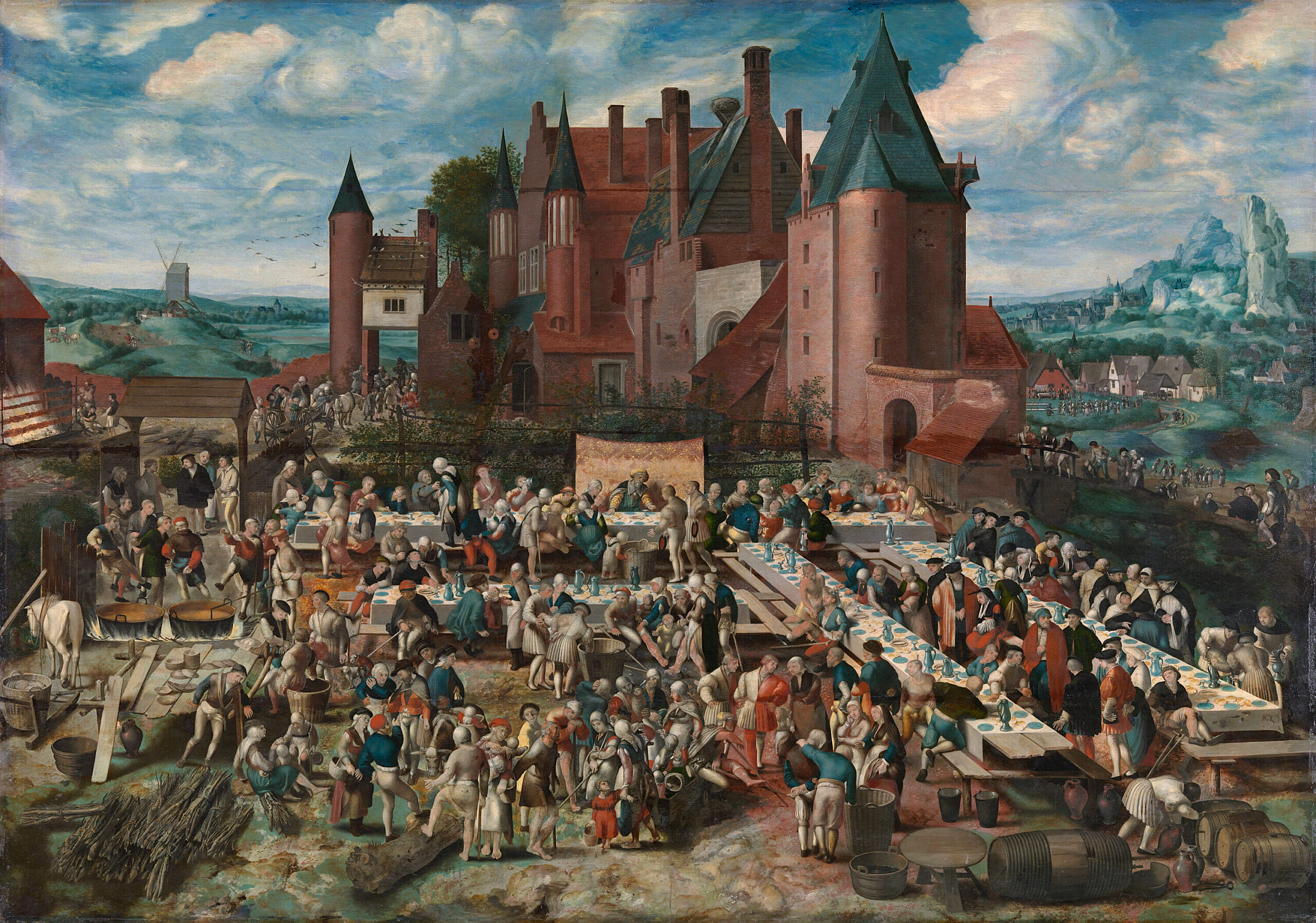
of the Rich Man,
Braunschweiger Monogrammist, mid. 16th c.
But what is it that makes people “young” in the Gospel sense? [Let us] to look to Our Lady. Let us therefore ask ourselves: How did Mary spend her youth? Why was it that in her the impossible became possible? She herself reveals it to us in the Canticle of the Magnificat. God regarded the low estate of his handmaiden (Luke 1:48a). It was Mary’s humility that God appreciated more than anything else in her. And it is precisely of humility that the other two Readings of today’s liturgy speak to us. Is it not a happy coincidence that this message is addressed to us exactly here in Loreto? Here, we think spontaneously of the Holy House of Nazareth, which is the Shrine of humility: the humility of God who took flesh, who made himself small, and the humility of Mary who welcomed him into her womb; the humility of the Creator and the humility of the creature. Jesus, Son of God and Son of man, was born from this encounter of humility. The greater you are, the more you humble yourself, so you will find favour in the sight of the Lord. For great is the might of the Lord (Sir 3:18-20) says the passage in Sirach; and in the Gospel, after the Parable of the Wedding Feast, Jesus concludes: Every one who exalts himself will be humbled, and he who humbles himself will be exalted (Luke 14:11). Today, this perspective mentioned in the Scriptures appears especially provocative to the culture and sensitivity of contemporary man. The humble person is perceived as someone who gives up, someone defeated, someone who has nothing to say to the world. Instead, this is the principal way, and not only because humility is a great human virtue but because, in the first place, it represents God’s own way of acting. It was the way chosen by Christ, the Mediator of the New Covenant, who being found in human form he humbled himself and became obedient unto death, even death on a cross (Php 2:8).
I seem to perceive in these words of God about humility an important message which is especially current for you who want to follow Christ and belong to his Church. This is the message: do not follow the way of pride but rather that of humility. Go against the tide: do not listen to the interested and persuasive voices that today are peddling on many sides models of life marked by arrogance and violence, by oppression and success at any cost, by appearances and by having at the expense of being. How many messages, which reach you especially through the mass media, are targeting you! Be alert! Be critical! Do not follow the wave produced by this powerful, persuasive action. Do not be afraid, dear friends, to prefer the “alternative” routes pointed out by true love: a modest and sound lifestyle; sincere and pure emotional relationships; honest commitment in studies and work; deep concern for the common good. Do not be afraid of seeming different and being criticized for what might seem to be losing or out of fashion; your peers… especially those who seem more distant from the mindset and values of the Gospel, are crying out to see someone who dares to live according to the fullness of humanity revealed by Jesus Christ.
Therefore, dear friends, the way of humility is not the way of renunciation but that of courage. It is not the result of a defeat but the result of a victory of love over selfishness and of grace over sin.
In following Christ and imitating Mary, we must have the courage of humility; we must entrust ourselves humbly to the Lord, because only in this way will we be able to become docile instruments in his hands and allow him to do great things in us. The Lord worked great miracles in Mary and in the Saints! …
Let us look above all at Mary. At her school, we too, like her, can experience that “yes” of God to humanity from which flow all the “yeses” of our life. It is true, the challenges you must face are many and important. The first however, is always that of following Christ to the very end without reservations and compromises. And following Christ means feeling oneself a living part of his body which is the Church. One cannot call oneself a disciple of Jesus if one does not love and obey his Church. The Church is our family in which love for the Lord and for our brothers and sisters, especially through participation in the Eucharist, enables us to experience the joy of already having a foretaste, now, of the future life that will be totally illuminated by Love. May our daily commitment be to live here below as though we were already in Heaven above.
Thus, feeling oneself as Church is a vocation to holiness for all; it is a daily commitment to build communion and unity, overcoming all resistance and rising above every incomprehension. In the Church we learn to love, teaching ourselves to accept our neighbour freely, to show caring attention to those in difficulty, to the poor and to the lowliest. The fundamental motivation that unites believers in Christ is not success but goodness, a goodness that is all the more authentic the more it is shared, and which does not primarily consist in having or in being powerful, but in being. In this way one builds the city of God with human beings, a city which at the same time grows on earth and comes down from Heaven because it develops in the encounter and collaboration between people and God (cf. Rev 21:2-3).
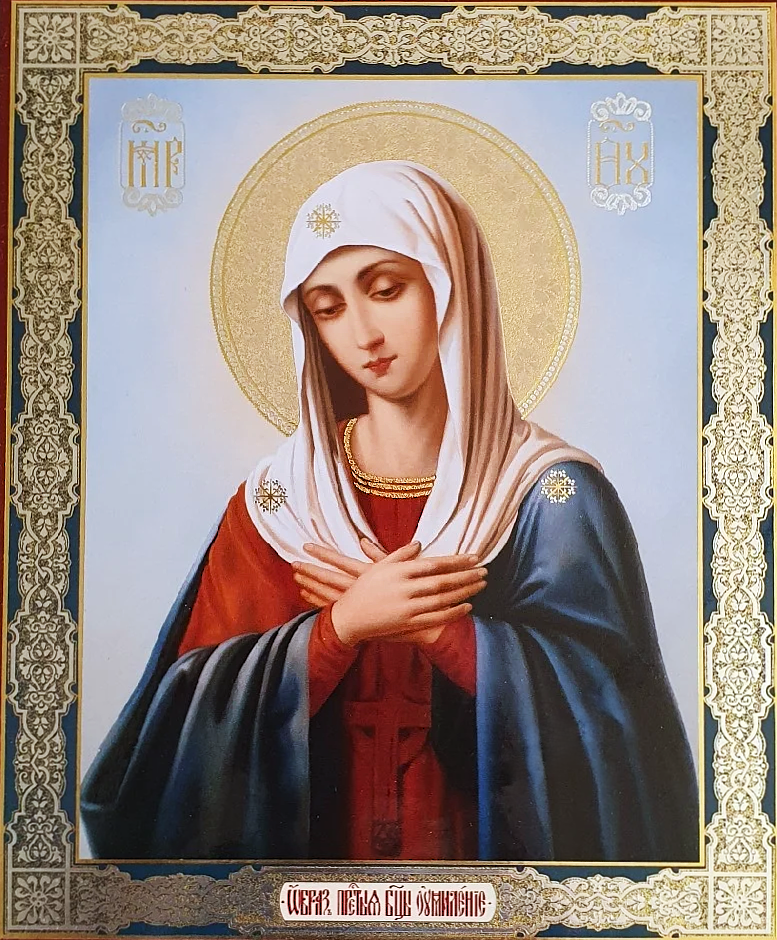
… Let us turn our gaze, our eyes, once again to Mary, model of humility and courage. Virgin of Nazareth, help us to be docile to the work of the Holy Spirit, as you were; help us to become ever more holy, disciples in love with your Son Jesus…. Amen!