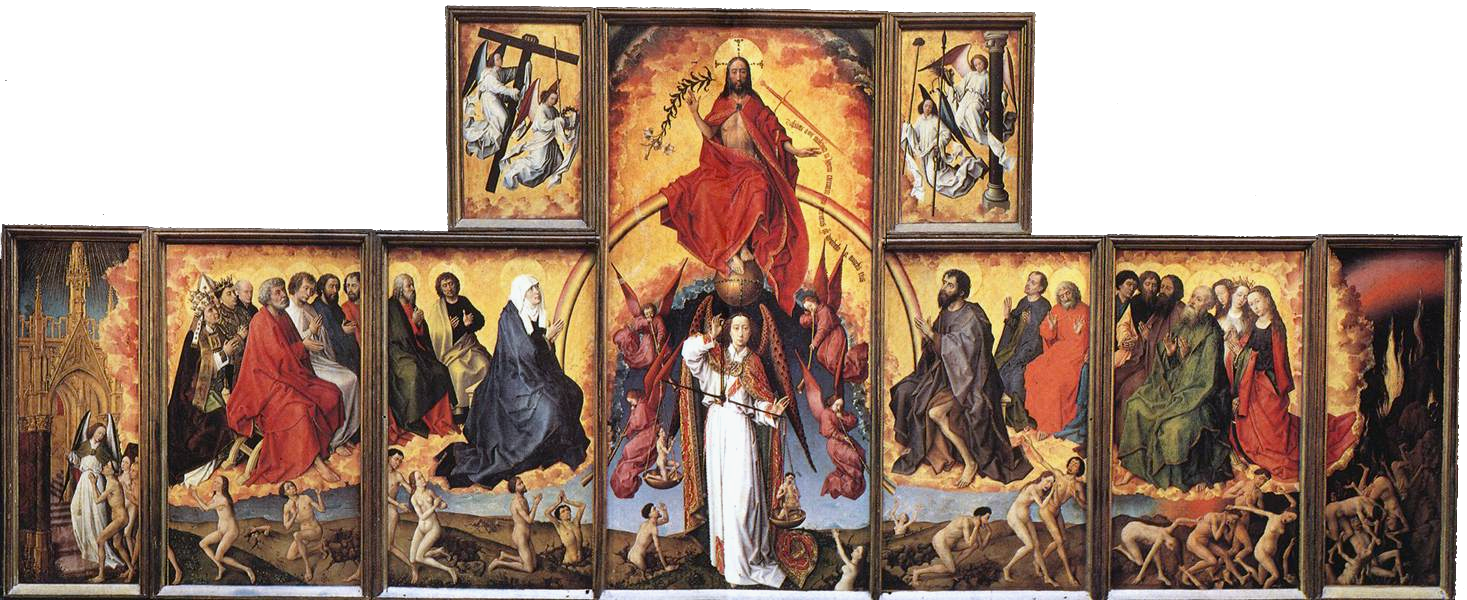
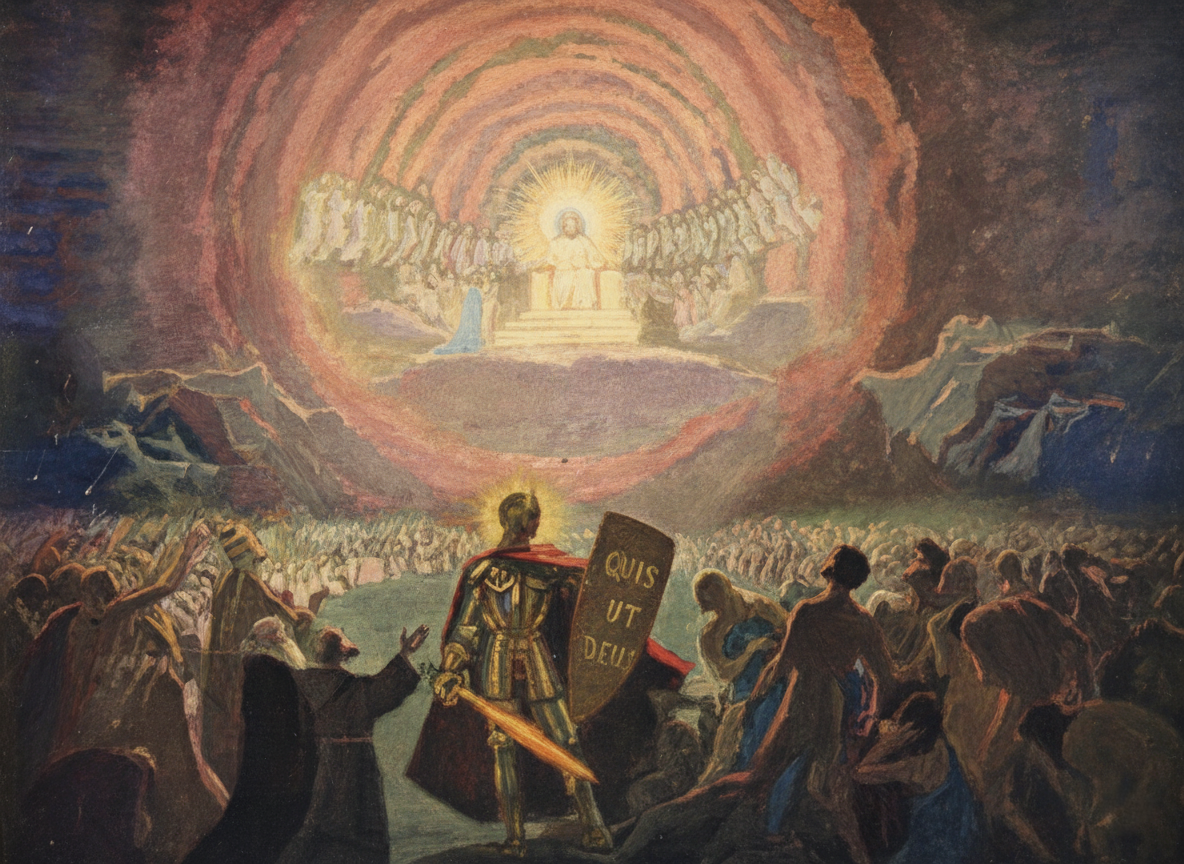
(Digital Remaster)
Translation of the Gospel According to St. Luke (21:25-33)
At that time Jesus said to His disciples: There shall be signs in the sun, and in the moon, and in the stars; and upon the earth distress of nations, by reason of the confusion of the roaring of the sea and of the waves: men withering away for fear and expectations of what shall come upon the whole world. For the powers of heaven shall be moved. And then they shall see the Son of Man coming in a cloud with great power and majesty. But when these things begin to come to pass, look up and lift up your heads, because your redemption is at hand. And He spoke to them a similitude: See the fig tree and all the trees: when they now shoot forth their fruit, you know that summer is nigh. So you also, when you shall see these things come to pass, know that the kingdom of God is at hand. Amen, I say to you, this generation shall not pass away till all things be fulfilled. Heaven and earth shall pass away: but My words shall not pass away.
A Message from St. Pope John Paul II’s “General Audience,” Wed. May 15, 2002
By way of support to the fundamental prayer of the Psalms, the Liturgy of Lauds offers us a series of biblical canticles of great spiritual intensity. Today we heard an example from the third and last chapter of the Book of Habakkuk. This prophet lived at the end of the 7th century BC when the kingdom of Judah felt squeezed between two expanding superpowers, Egypt on the one hand, and, Babylon, on the other.
Many scholars hold that this final hymn is a quotation. An authentic liturgical song was added as an appendix to Habakkuk’s brief work, to be set to the tune of a lamentation and accompanied by stringed instruments, as two notes at the beginning and the end of the Canticle say (cf. Hab 3:1; 3:19b). The Liturgy of Lauds, by taking up the thread of the ancient prayer of Israel, invites us to transform this composition into a Christian hymn, choosing some powerful verses (cf. Hab 3:2-4; 3:13a; 3:15-19a).
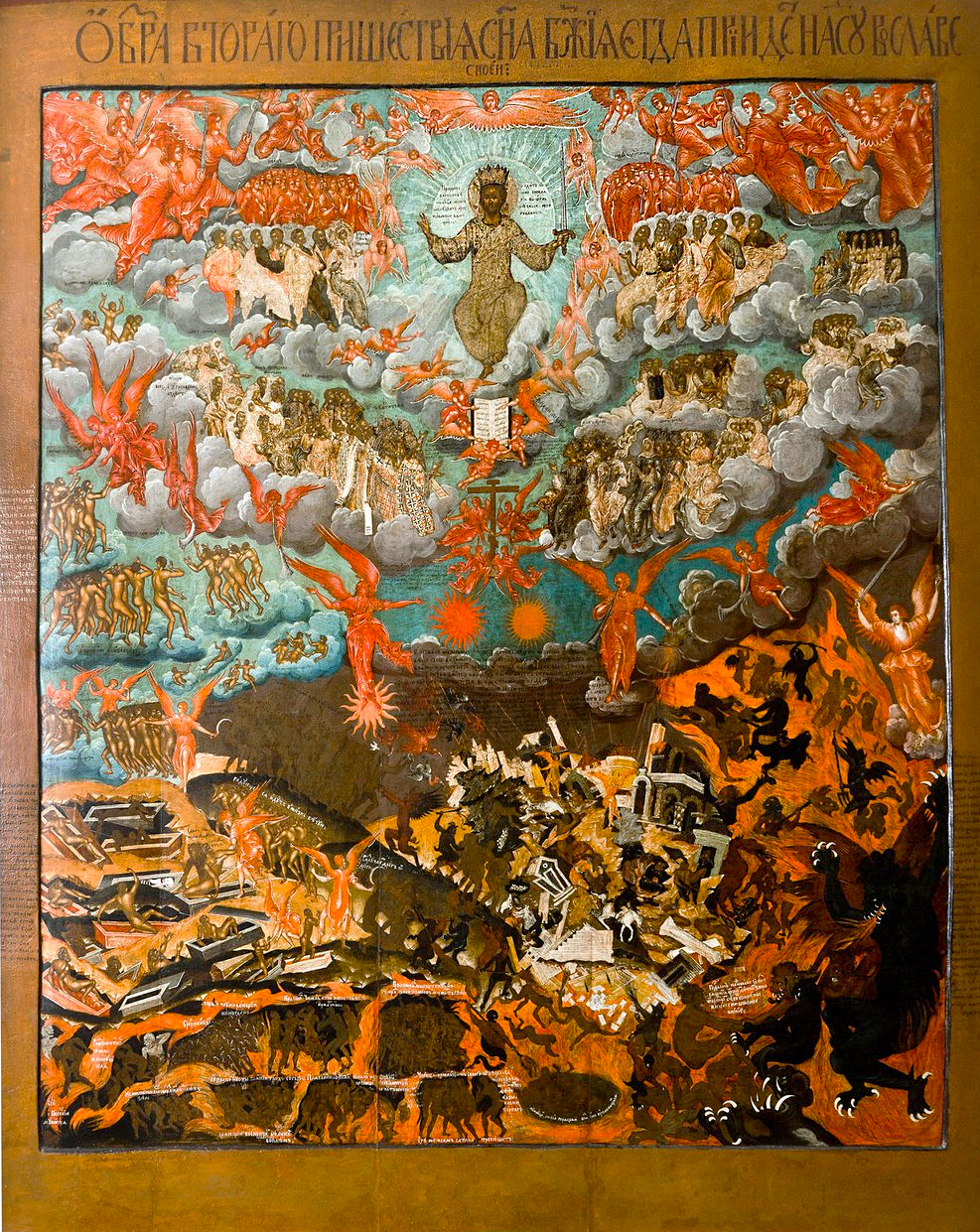
The hymn, that also shows considerable poetic skill, presents a magnificent image of the Lord (cf. Ha 2,3-4). His figure dominates solemnly the world scene and the universe trembles in the face of his majestic advance. He is coming from the south, from Teman and from Mount Paran (cf. Hab 2:3), from the area of Sinai, the site of the great revelatory epiphany for Israel. In Psalm 67[68] the Lord came from Sinai into the holy place of Jerusalem (cf. Hab 2:18). His appearance, in keeping with a constant biblical tradition, is surrounded by brilliant light (cf. Hab 3:4).
It is the radiance of his transcendent mystery that is communicated to humanity. In fact, the light is outside us, we can neither grasp it nor hold on to it; yet it envelops, enlightens and warms us. God is like this, both distant and yet close, someone beyond us yet beside us, in fact willing to be with us and in us. The earth responds with a chorus of praise to the revelation of his majesty: it is a cosmic response, a prayer to which man gives voice.
Christian tradition has lived this interior experience not only in personal spirituality but also in daring artistic creations. Beyond the majestic cathedrals of the Middle Ages, let us mention above all the art of the Christian East, with its wonderful icons and the brilliant architecture of its churches and monasteries.
Of these, the Church of Hagia Sophia in Constantinople remains a kind of archetype as regards the creation of the space for Christian prayer, in which the presence and ethereality of the light enable one to perceive both the closeness and the transcendence of the divine reality. It penetrates the whole praying community to the very marrow of their bones and invites them to go beyond themselves and become entirely immersed in the ineffability mystery of God. Just as important are the artistic and spiritual representations that are the hallmark of the monasteries of that Christian tradition. In those truly sacred spaces – and one immediately thinks of Mount Athos – time contains in itself a sign of eternity. The mystery of God is expressed and hidden in those spaces through the continuous prayer of the monks and hermits who have always been compared to the angels.
But let us return to the Prophet Habakkuk’s canticle. For the sacred author, the Lord’s entry into the world has a precise meaning. He wills to enter into human history in the course of the years as repeated twice in verse 2, to judge and make its affairs better which we conduct in such a confused and at times perverse way.
Then God shows his indignation (cf. Hab 2:2c) against evil. And the hymn mentions a series of inexorable divine interventions, but without specifying if these are direct or indirect actions. The Exodus of Israel is evoked, when Pharoah’s cavalry were drowned in the sea (cf. Hab 2:15). However, in a flash there comes before us a view of what the Lord is about to accomplish in the confrontations with the new oppressors of his people. God’s intervention is described in an almost “visible” way through a series of agricultural images: Though the fig tree do not blossom, nor fruit be on the vines, the produce of the olive fail and the fields yield no food, the flock will be cut off from the fold and there be no herd in the stalls (Hab 2:17). All signs of peace and fruitfulness are eliminated, and the world looks like a desert. This is a symbol that other prophets like to use (cf. Jer 4,19-26; 12:7-13; 14:1-10) to illustrate the judgement of the Lord who is not indifferent to evil, oppression and injustice.
In his coming the Lord frees the oppressed, makes hope blossom in the heart of the victims.
In the face of the divine intervention, the person praying remains terrified (cf. Hab 3,16), he trembles, he feels spiritually empty, he is struck with a tremor because the God of justice is infallible, very different from earthly judges.
But the Lord’s entry has yet another purpose, which our hymn joyfully praises. In his indignation he does not forget his compassionate mercy (cf. Hab 2:2). He goes forth from the scene of his glory not only to destroy the arrogance of the wicked, but also to save his people and his anointed (cf. Hab 2,13), namely, Israel and its king. He also wants to set free the oppressed, make hope blossom in the victims’ hearts, and open a new era of justice.
This is why, though our hymn is marked by a tone of lamentation, it becomes a hymn of joy. The anticipated disasters look forward to the liberation from oppressors (cf. Hab 2:15). So they elicit the joy of the righteous one who exclaims: yet I will rejoice in the Lord, I will exult in the God of my salvation (Hab 2:18). The same attitude is suggested by Jesus to his disciples at the time of the apocalyptic cataclysms: When these things begin to take place, look up and raise your heads, because your redemption is at hand (Luke 21:28).
In Habakkuk’s canticle the final verse that expresses regained serenity is very beautiful. The Lord is defined – as David did in Psalm 18 – not only as the strength of his faithful, but also as the one who gives them agility, freshness and serenity in dangers. David sang: I love you, O Lord, my strength … he made my feet like the feet of hinds, and set me secure on the heights (Psa 18:2; 18:34). Now our singer exclaims God, the Lord, is my strength; he makes my feet swift as those of hinds, and enables me to go upon the heights (Hab 3:19). When we have the Lord beside us, we no longer fear nightmares and obstacles, but we go forward with a light step and joy on the ever harsh path of life.