
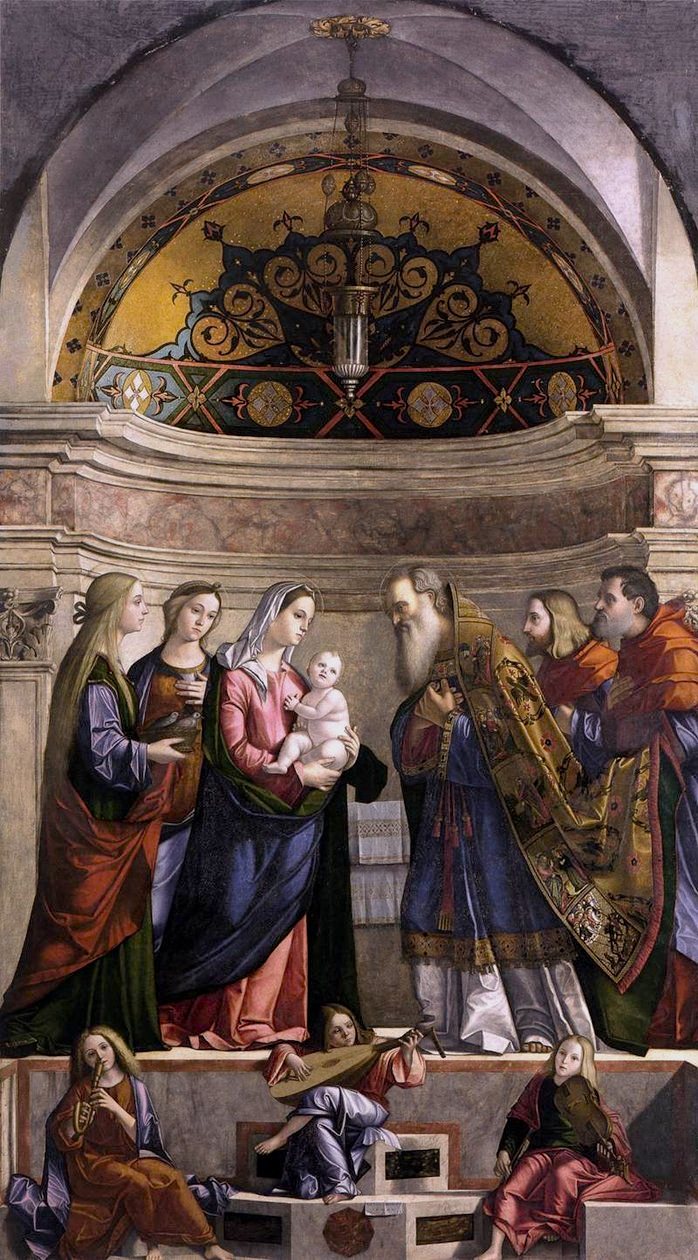
Vittore Carpaccio, 1510
Translation of the Gospel According to Luke (2:33-40)
At that time Joseph and Mary, the mother of Jesus, were wondering at those things which were spoken concerning Him, And Simeon blessed them, and said to Mary His Mother: Behold this child is set for the fall and for the resurrection of many in Israel: and for a sign which shall be contradicted: and thine own soul a sword shall pierce, that out of many hearts thoughts may be revealed. And there was one Anna a prophetess, the daughter of Phanuel, of the tribe of Aser. She was far advanced in years, and had lived with her husband seven years from her virginity. And she was a widow until fourscore and four years: who departed not from the temple, by fastings and prayers serving night and day. Now she, at the same hour, coming in, confessed to the Lord: and spoke of Him to all that looked for the redemption of Israel. And after they had performed all things according to the law of the Lord, they returned into Galilee, to the city of Nazareth. And the Child grew and waxed strong, full of wisdom: and the grace of God was in Him.
A Message from Pope Benedict XVI’s “Sermon for the Feast of the Presentation of the Lord” (12th World Day of Consecrated Life), Feb., 2nd, 2008.
In his account of the Presentation of Jesus in the Temple, at least three times the Evangelist Luke emphasizes that Mary and Joseph acted in accordance with “the Law of the Lord” (cf. Luke 2:22, 23, 39), moreover, they always appear to be listening attentively to the Word of God. This attitude is an eloquent example for you, men and women religious; and for you, members of Secular Institutes and of other forms of Consecrated Life. Dear brothers and sisters, I ask you to make your contribution to this ecclesial commitment, witnessing to the importance, especially for those who like you, the Lord calls to a more intimate “sequela”, of placing the Word of God at the centre of all things. In fact, the Consecrated Life is rooted in the Gospel. Down the centuries, the Gospel – as it were, its supreme rule – has continued to inspire it and the Consecrated Life is called to refer constantly to the Gospel, to remain alive and fertile, bearing fruit for the salvation of souls.
At the root of the different expressions of Consecrated Life there is always a strong Gospel inspiration. I think of St Anthony Abbot who was moved by listening to Christ’s words: “If you would be perfect, go, sell what you possess and give to the poor, and you will have treasure in heaven; and come, follow me” (Matt 19:21) (cf. Vita Antonii, 2, 4). Anthony listened to these words as if they were addressed to him personally by the Lord. St. Francis of Assisi in his turn affirmed that it was God who revealed to him that he should live according to the form of the holy Gospel (Testament, 17; Franciscan Omnibus 116). “Francis”, wrote Thomas of Celano, “who heard that Christ’s disciples were supposed to possess neither gold, nor silver, nor money, nor purse; were to have neither bread nor staff, were to have neither shoes nor two tunics… rejoicing in the Holy Spirit said: “This is what I want! This is what I ask! This is what I want to do from the bottom of my heart!'” (I Celano 83; Franciscan Omnibus 670, 672).
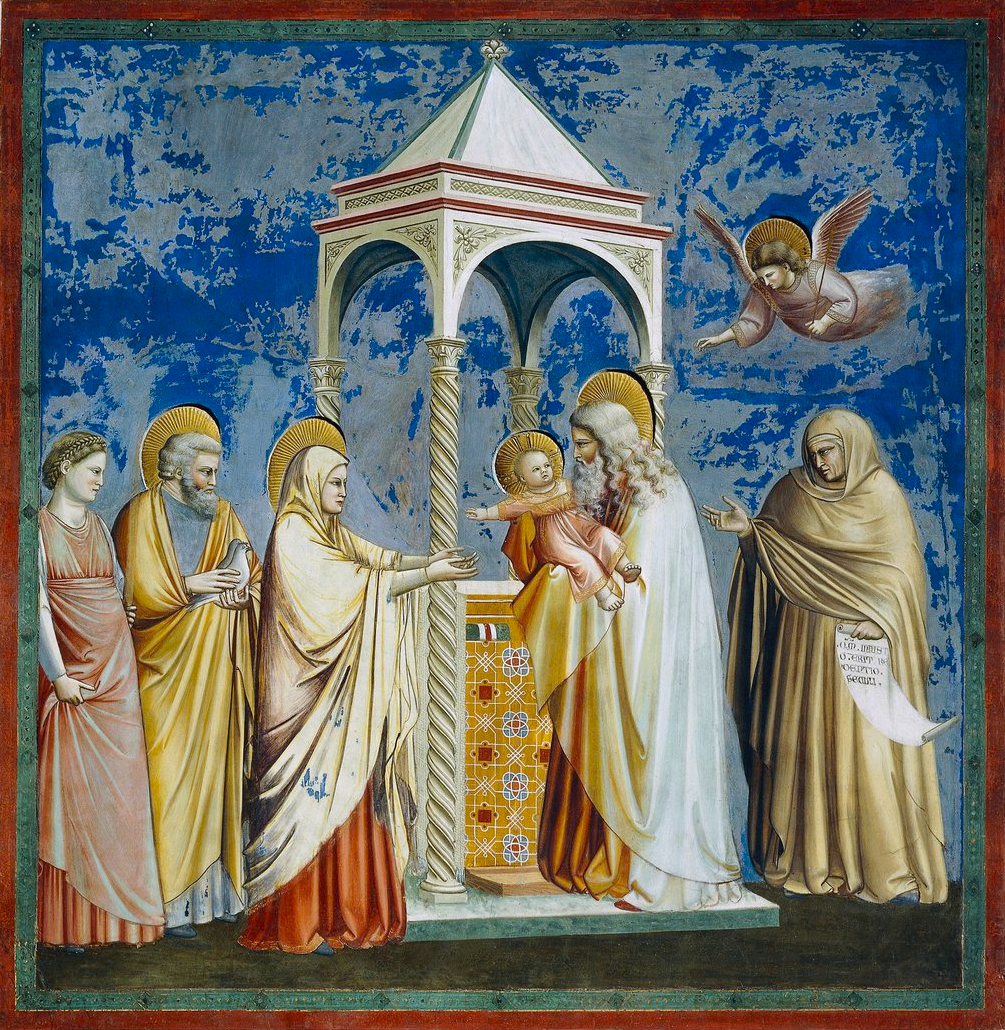
Giotto, cir. late 13th early 14th c.
The Instruction Starting Afresh from Christ recalls: “It was the Holy Spirit who sparked the Word of God with new light for the Founders and Foundresses. Every charism and every Rule springs from it and seeks to be an expression of it” (n. 24). And indeed, the Holy Spirit attracts some people to live the Gospel in a radical way and translate it into a style of more generous following. So it is that a work, a religious family, is born which with its very presence becomes in turn a living “exegisis” of the Word of God. The Second Vatican Council says that the succession of charisms in the Consecrated Life can therefore be read as an unfolding of Christ down the ages, as a living Gospel that is actualized in ever new forms (cf. Dogmatic Constitution Lumen Gentium, 46). The mystery of Christ is reflected in the works of Foundresses and Founders, a word of his, an illuminating ray of his radiant Face, the splendour of the Father (cf. Post-Synodal Apostolic Exhortation Vita Consecrata, 16).
In the course of the centuries the proposal of the following of Christ without compromise, as it is presented to us in the Gospel, has therefore constituted the ultimate and supreme rule for religious life (cf. Perfectae Caritatis, 2). In his Rule St Benedict refers to Scripture as the “most exact rule of human life” (n. 73: 2-5). St. Dominic, whose words and works proclaimed him a man of the Gospel at all times (cf. Libellus de Principiis Ordinis Praedicatorum, 104: in P. Lippini, San Domenico visto dai suoi contemporanei, Ed. Studio Dom., Bologna, 1982, 110) desired his brother preachers also to be “men of the Gospel” (First Constitutions or Consuetudines, 31). St. Clare of Assisi imitated Francis’ experience to the full: “The form of life of the Order of the Poor Sisters”, she wrote, “is this: to observe the Holy Gospel of Our Lord Jesus Christ” (Rule, I, 1-2; Franciscan Omnibus, n. 2750). St. Vincent Pallotti said: “Since the life of Jesus Christ is the fundamental rule of our small Congregation… we must aim at what is most perfect always and in everything” (cf. Complete Works, II, 541-546; VIII, 63, 67, 253, 254, 466). And St. Luigi Orione wrote: “Our first Rule and life is to observe the holy Gospel, in great humility and in loving sweetness and on fire with God” (Letters of Don Orione, Rome, 1969, Vol. II, 278).
This rich tradition attests that Consecrated Life is “deeply rooted in the example and teaching of Christ the Lord” (Vita Consecrata, 1) and can be compared to “a plant with many branches which sinks its roots into the Gospel and brings forth abundant fruit in every season of the Church’s life” (ibid., n. 5). Its mission is to recall that all Christians are brought together by the Word, to live of the Word and to remain under its lordship. It is therefore the special duty of men and women religious “to remind the baptized of the fundamental values of the Gospel” (Vita Consecrata, 33). By so doing their witness imbues the Church with “a much-needed incentive towards ever greater fidelity to the Gospel” (ibid., n. 3) and indeed, we might say, is an “eloquent, albeit often silent, proclamation of the Gospel” (ibid., n. 25). This is why, in my two Encyclicals as on other occasions, I have not failed to cite the example set by Saints and Blesseds belonging to Institutes of Consecrated Life.
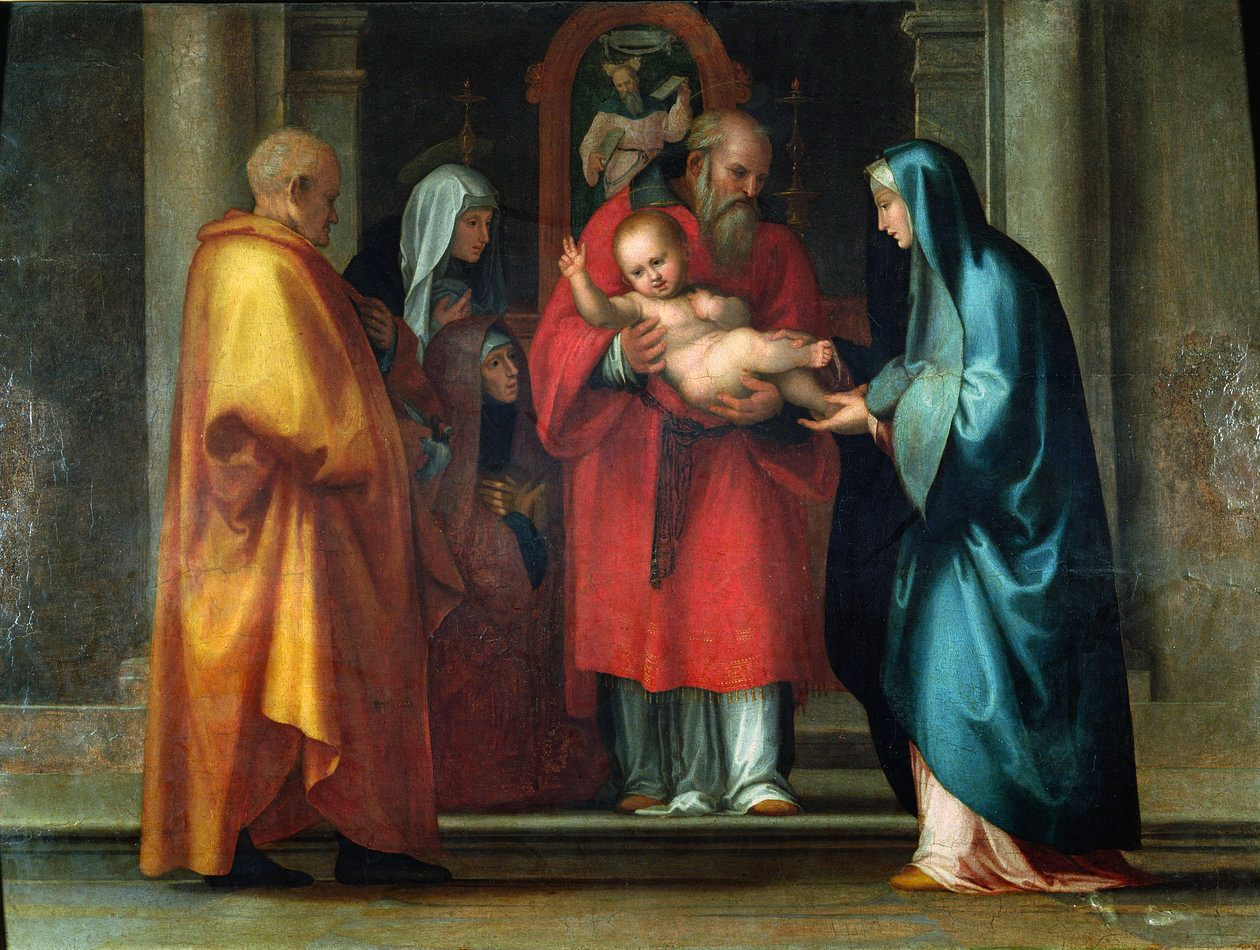
Fra Bartolommeo, cir. late 15th,
early 16th c.
Dear brothers and sisters, nourish your day with prayer, meditation and listening to the Word of God. May you, who are familiar with the ancient practice of lectio divina, help the faithful to appreciate it in their daily lives too. And may you know how to express what the Word suggests, letting yourself be formed by it so that you bring forth abundant fruit, like a seed that has fallen into good soil. Thus, you will be ever docile to the Spirit and you will grow in union with God, you will cultivate fraternal communion among yourselves and will be ready to serve your brethren generously, especially those in need. May people see your good works, a fruit of the Word of God that lives in you, and glorify your Heavenly Father (cf. Matt 5:16)!