
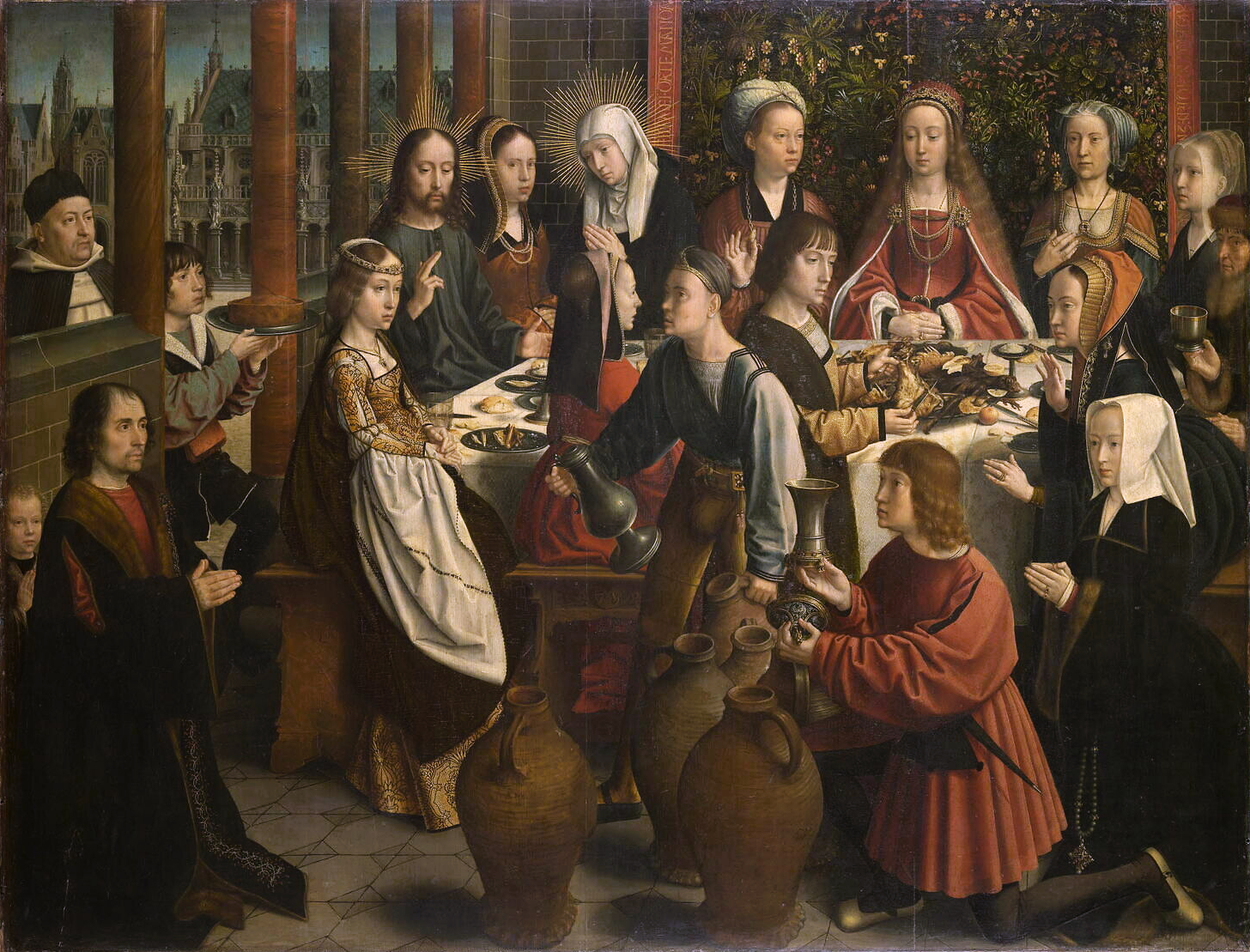
Gerard David, 1500-1510
Translation of the Holy Gospel According to John (2:1-11)
At that time there was a marriage in Cana of Galilee: and the mother of Jesus was there. And Jesus also was invited, and His disciples, to the marriage. And the wine failing, the mother of Jesus saith to Him: They have no wine. And Jesus saith to her: Woman, what is that to Me and to thee? My hour is not yet come. His mother saith to the waiters: Whatsoever He shall say to you, do ye. Now there were set there six water pots of stone, according to the manner of the purifying of the Jews, containing two or three measures apiece. Jesus saith to them: Fill the water-pots with water. And they filled them up to the brim. And Jesus saith to them: Draw out now, and carry to the chief steward of the feast. And they carried it. And when the chief steward had tasted the water made wine, and knew not whence it was, but the waiters knew who had drawn the water: the chief steward calls the bridegroom, and saith to him: Every man at first sets forth good wine: and when men have well drunk, then that which is worse: but thou hast kept the good wine until now. This beginning of miracles did Jesus in Cana of Galilee; and manifested His glory, and His disciples believed in Him.
A Message From Pope Benedict XVI, “Homily for Mass,” Sept. 15th, 2008
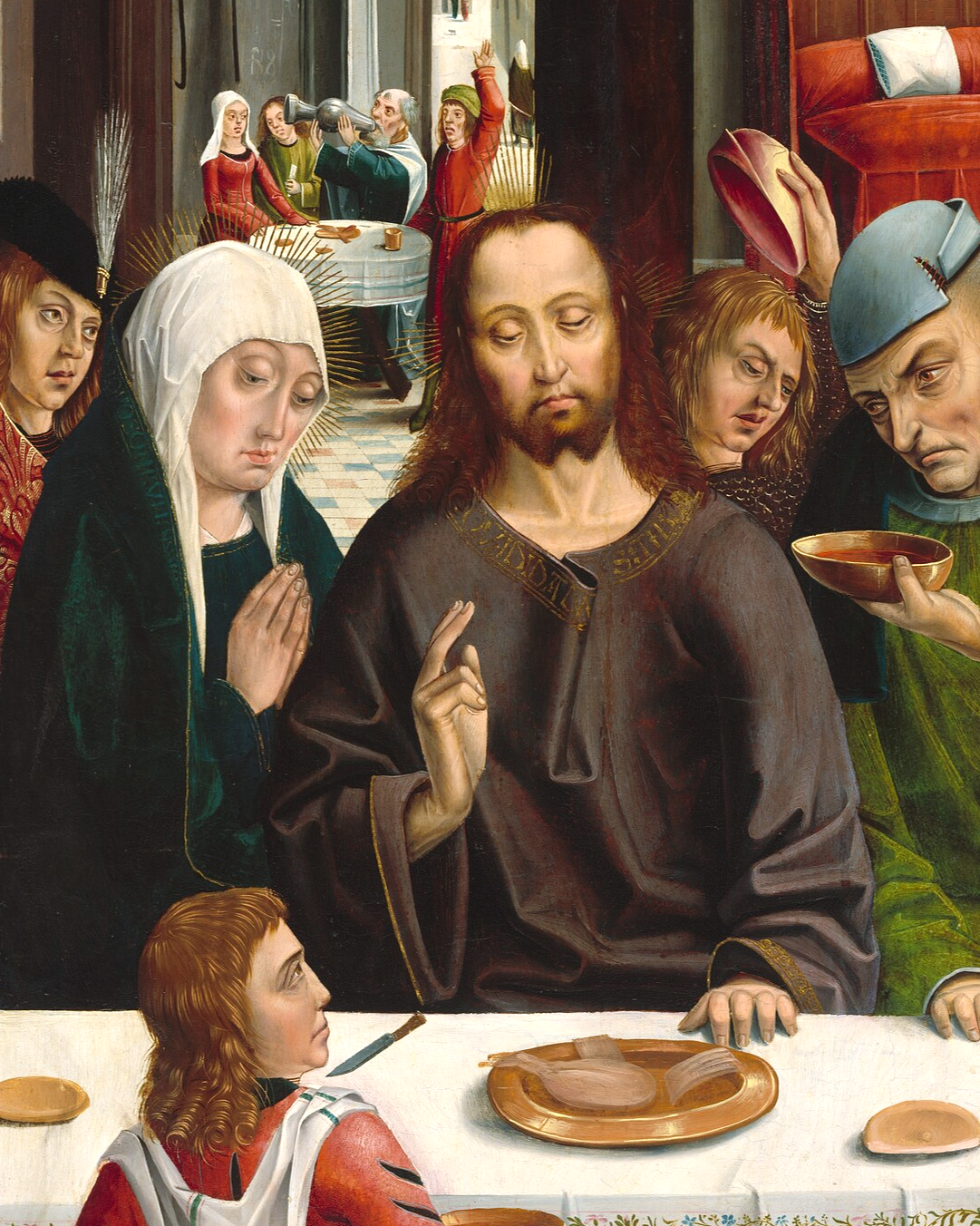
Master of the Catholic Kings, c. 1485/1500
Before introducing herself, some days later, as “the Immaculate Conception”, Mary first taught Bernadette to know her smile, this being the most appropriate point of entry into the revelation of her mystery.
In the smile of the most eminent of all creatures, looking down on us, is reflected our dignity as children of God, that dignity which never abandons the sick person. This smile, a true reflection of God’s tenderness, is the source of an invincible hope. Unfortunately, we know only too well: the endurance of suffering can upset life’s most stable equilibrium; it can shake the firmest foundations of confidence, and sometimes even leads people to despair of the meaning and value of life. There are struggles that we cannot sustain alone, without the help of divine grace. When speech can no longer find the right words, the need arises for a loving presence: we seek then the closeness not only of those who share the same blood or are linked to us by friendship, but also the closeness of those who are intimately bound to us by faith. Who could be more intimate to us than Christ and his holy Mother, the Immaculate One? More than any others, they are capable of understanding us and grasping how hard we have to fight against evil and suffering. The Letter to the Hebrews says of Christ that he is not unable to sympathize with our weaknesses; for in every respect he has been tempted as we are” (Heb 4:15). I would like to say, humbly, to those who suffer and to those who struggle and are tempted to turn their backs on life: turn towards Mary! Within the smile of the Virgin lies mysteriously hidden the strength to fight against sickness and for life. With her, equally, is found the grace to accept without fear or bitterness to leave this world at the hour chosen by God.
How true was the insight of that great French spiritual writer, Dom Jean-Baptiste Chautard, who in L’ âme de tout apostolat, proposed to the devout Christian to gaze frequently into the eyes of the Virgin Mary! Yes, to seek the smile of the Virgin Mary is not a pious infantilism, it is the aspiration, as Psalm 44 says, of those who are the richest of the people (Psa 44:13). “The richest”, that is to say, in the order of faith, those who have attained the highest degree of spiritual maturity and know precisely how to acknowledge their weakness and their poverty before God. In the very simple manifestation of tenderness that we call a smile, we grasp that our sole wealth is the love God bears us, which passes through the heart of her who became our Mother. To seek this smile, is first of all to have grasped the gratuitousness of love; it is also to be able to elicit this smile through our efforts to live according to the word of her Beloved Son, just as a child seeks to elicit its mother’s smile by doing what pleases her. And we know what pleases Mary, thanks to the words she spoke to the servants at Cana: Do whatever he tells you (John 2:5).
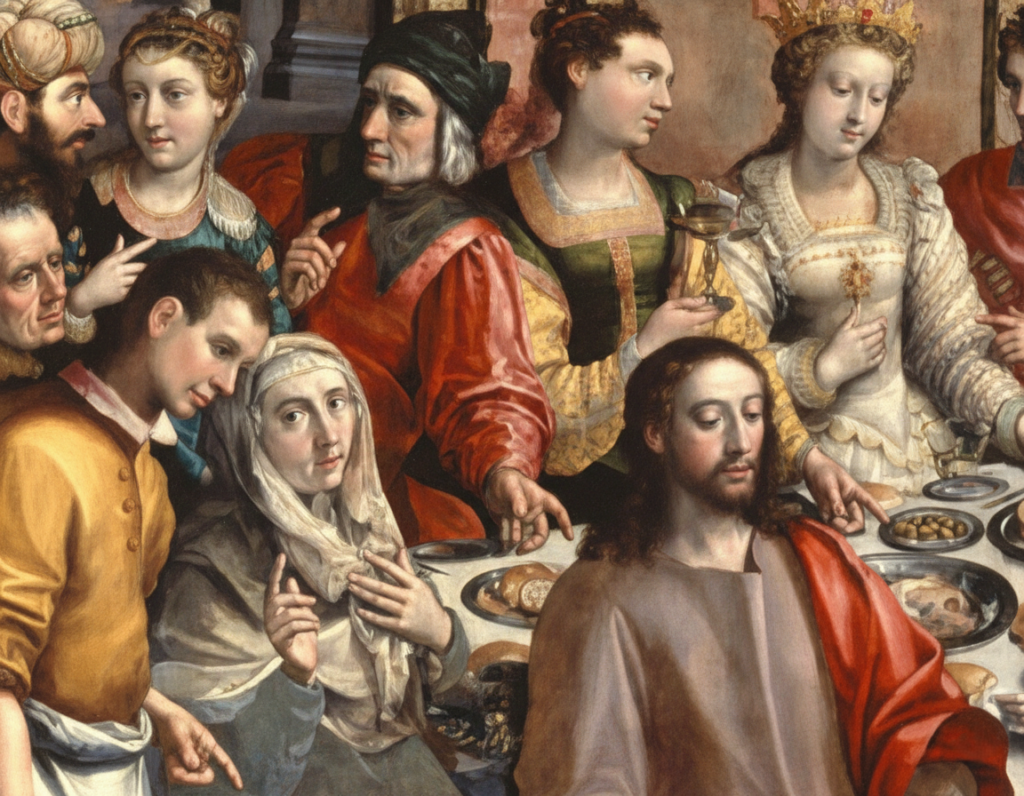
Maerten de Vos, 1596-97
Mary’s smile is a spring of living water. He who believes in me, says Jesus, out of his heart shall flow rivers of living water (John 7:38). Mary is the one who believed and, from her womb, rivers of living water have flowed forth to irrigate human history. The spring that Mary pointed out to Bernadette here in Lourdes is the humble sign of this spiritual reality. From her believing heart, from her maternal heart, flows living water which purifies and heals. By immersing themselves in the baths at Lourdes, so many people have discovered and experienced the gentle maternal love of the Virgin Mary, becoming attached to her in order to bind themselves more closely to the Lord! In the liturgical sequence of this feast of Our Lady of Sorrows, Mary is honoured with the title of Fons Amoris, “Fount of Love”. From Mary’s heart, there springs up a gratuitous love which calls forth a response of filial love, called to ever greater refinement. Like every mother, and better than every mother, Mary is the teacher of love. That is why so many people come here to Lourdes, to quench their thirst at the “spring of love” and to let themselves be led to the sole source of salvation, her son Jesus the Saviour.