
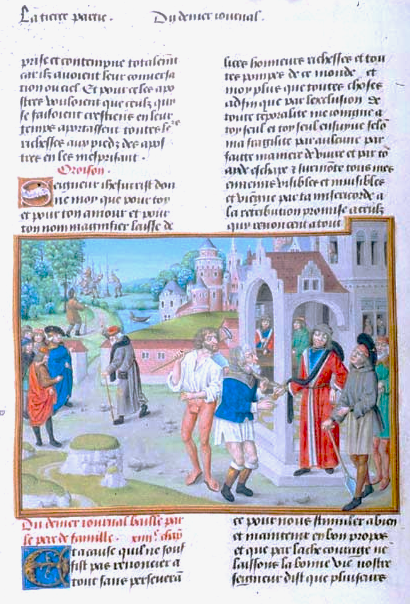
Vita Christi, ca. 1487-1490
Translation of the Holy Gospel According to Matthew (Matt 20:1-16)
At that time Jesus spoke to his disciples this parable: The kingdom of heaven is like to an householder who went out early in the morning to hire laborers into his vineyard. And having agreed with the laborers for a penny a day, he sent them into his vineyard. And going out about the third hour, he saw others standing in the market place idle, and he said to them: Go you also into my vineyard, and I will give you what shall be just. And they went their way. And again he went out about the sixth and the ninth hour: and did in like manner. But about the eleventh hour he went out and found others standing, and he said to them: Why stand you here all the day idle? They say to him: Because no man has hired us. He said to them: Go you also into my vineyard. And when evening was come, the lord of the vineyard said to his steward: Call the laborers and pay them their hire, beginning from the last even to the first. When therefore they were come that came about the eleventh hour, they received every man a penny. But when the first also came, they thought that they should receive more: and they also received every man a penny. And receiving it they murmured against the master of the house, saying: These last have worked but one hour, and thou hast made them equal to us that have borne the burden of the day and the heats. But he answering said to one of them: Friend, I do thee no wrong: did thou not agree with me for a penny? Take what is thine and go thy way: I will also give to this last even as to thee. Or, is it not lawful for me to do what I will? Is thy eye evil, because I am good? So shall the last be first, and the first last. For many are called, but few chosen.
A Message From St. John Chrysostom’s Homilies on Matthew, LXIV.
Then He adds also a parable, as training those who had fallen short to a great forwardness.
“For the kingdom of Heaven,” He said, “is like to a man that is a householder, which went out early in the morning to hire laborers into his vineyard. And when he had agreed with them for a penny a day, he sent them into his vineyard…”
What is to us the intent of this parable? For the beginning doth not harmonize with what is said at the end, but intimates altogether the contrary. For in the first part He shows all enjoying the same, and not some cast out, and some brought in; yet He Himself both before the parable and after the parable said the opposite thing. “That the first shall be last, and the last first,” that is, before the very first, those not continuing first, but having become last. For in proof that this is His meaning, He added, “Many are called, but few chosen,” so as doubly both to sting the one, and to soothe and urge on the other.
But the parable saith not this, but that they shall be equal to them that are approved, and have labored much. “For thou hast made them equal unto us,” it is said, “that have borne the burden and heat of the day.”
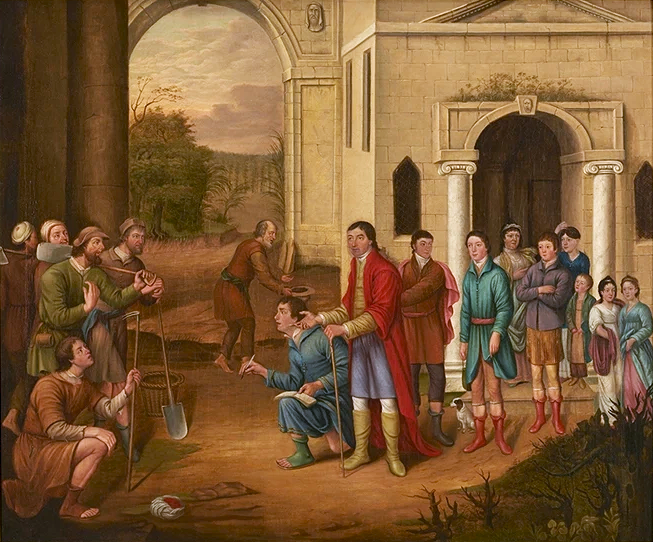
American School, 19th c
What then is the meaning of the parable? For it is necessary to make this first clear, and then we shall clear up that other point. By a vineyard He meaneth the injunctions of God and His commandments: by the time of laboring, the present life: by laborers, them that in different ways are called to the fulfillment of the injunctions: by early in the morning, and about the third and ninth and eleventh hours, them who at different ages have drawn near to God, and approved themselves.
But the question is this, whether the first having gloriously approved themselves, and having pleased God, and having throughout the whole day shone by their labors, are possessed by the basest feeling of vice, jealousy and envy. For when they had seen them enjoying the same rewards, they say, “These last have wrought but one hour, and thou hast made them equal unto us, that have borne the burden and heat of the day.” And in these words, when they are to receive no hurt, neither to suffer diminution as to their own hire, they were indignant, and much displeased at the good of others, which was proof of envy and jealousy. And what is yet more, the good man of the house in justifying himself with respect to them, and in making his defense to him that had said these things, convicts him of wickedness and the basest jealousy, saying, “Didst thou not agree with me for a penny? Take that thine is, and go thy way; I will give unto the last even as unto thee. Is thine eye evil, because I am good?”
What then is it which is to be established by these things? For in other parables also this self-same thing may be seen. For the son who was approved is brought in, as having felt this self-same thing, when he saw his prodigal brother enjoying much honor, even more than himself. For like as these enjoyed more by receiving first, so he in a greater degree was honored by the abundance of the things given him; and to these things he that was approved bears witness.
What then may we say? There is no one who is thus justifying himself, or blaming others in the kingdom of Heaven; away with the thought! for that place is pure from envy and jealousy. For if when they are here the saints give their very lives for sinners, much more when they see them there in the enjoyment of these things, do they rejoice and account these to be blessings of their own. Wherefore then did He so frame His discourse? The saying is a parable, wherefore neither is it right to inquire curiously into all things in parables word by word, but when we have learnt the object for which it was composed, to reap this, and not to busy one’s self about anything further.
Wherefore then was this parable thus composed? what is its object to effect? To render more earnest them that are converted and become better men in extreme old age, and not to allow them to suppose they have a less portion. So it is for this cause He introduces also others displeased at their blessings, not to represent those men as pining or vexed, away with the thought! but to teach us that these have enjoyed such honor, as could even have begotten envy in others. Which we also often do, saying, “Such a one blamed me, because I counted thee worthy of much honor,” neither having been blamed, nor wishing to slander that other, but hereby to show the greatness of the gift which this one enjoyed.
But wherefore can it have been that He did not hire all at once? As far as concerned Him, He did hire all; but if all did not hearken at once, the difference was made by the disposition of them that were called. For this cause, some are called early in the morning, some at the third hour, some at the sixth, some at the ninth, some at the eleventh, when they would obey.
This Paul also declared when he said, “When it pleased Him, who separated me from my mother’s womb (Gal 1:15). When did it please Him? When he was ready to obey. For He willed it even from the beginning, but because he would not have yielded, then it pleased Him, when Paul also was ready to obey. Thus also did He call the thief, although He was able to have called him even before, but he would not have obeyed. For if Paul at the beginning would not have obeyed, much more the thief.
And if they say, “No man hath hired us,” in the first place as I said we must not be curious about all the points in the parables; but here neither is the good man of the house represented to say this, but they; but he cloth not convict them, that he might drive them to perplexity, but might win them over. For that He called all, as far as lay in Him, from the first even the parable shows, saying, that “He went out early in the morning to hire.”
From everything then it is manifest to us, that the parable is spoken with reference to them who from earliest youth, and those who in old age and more tardily, lay hold on virtue; to the former, that they may not be proud, neither reproach those called at the eleventh hour; to the latter, that they may learn that it is possible even in a short time to recover all.
For since He had been speaking about earnestness, and the casting away of riches, and contempt of all one’s possessions, but this needed much vigor of mind and youthful ardor; in order to kindle in them a fire of love, and to give vigor to their will, He shows that it is possible even for men coming later to receive the hire of the whole day.
But He doth not say it thus, lest again He should make them proud, but he shows that the whole is of His love to man, and because of this they shall not fail, but shall themselves enjoy the unspeakable blessings.
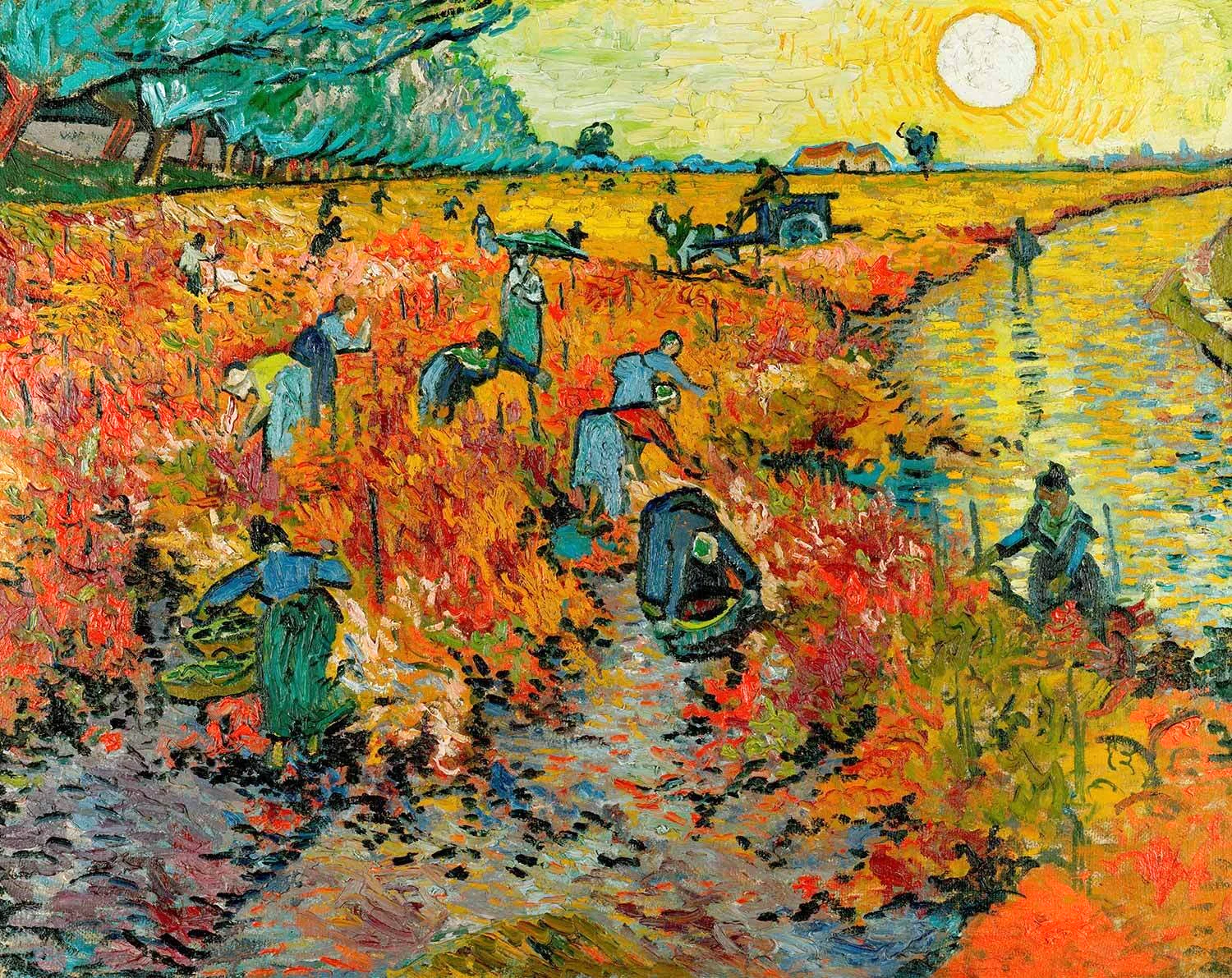
Vincent van Gogh 1888
And this chiefly is what it is His will to establish by this parable. And if He adds, that, “So the last shall be first and the first last; for many are called, but few chosen,” marvel not. For not as inferring it from the parable doth He say this, but His meaning is this, that like as this came to pass, so shall that come to pass. For here indeed the first did not become last, but all received the same contrary to hope and expectation. But as this result took place contrary to hope and contrary to expectation, and they that came before were equalled by them that followed, so shall that also come to pass which is more than this, and more strange, I mean, that the last should come to be even before the first, and that the first should be after these. So that that is one thing, and this another.
But He seems to me to say these, things, darkly hinting at the Jews, and amongst the believers at those who at first shone forth, but afterwards neglected virtue, and fell back; and those others again that have risen from vice, and have shot beyond many. For we see such changes taking place both with respect to faith and practice.
Wherefore I entreat you let us use much diligence both to stand in the right faith, and to show forth an excellent life. For unless we add also a life suitable to our faith, we shall suffer the extremest punishment.