
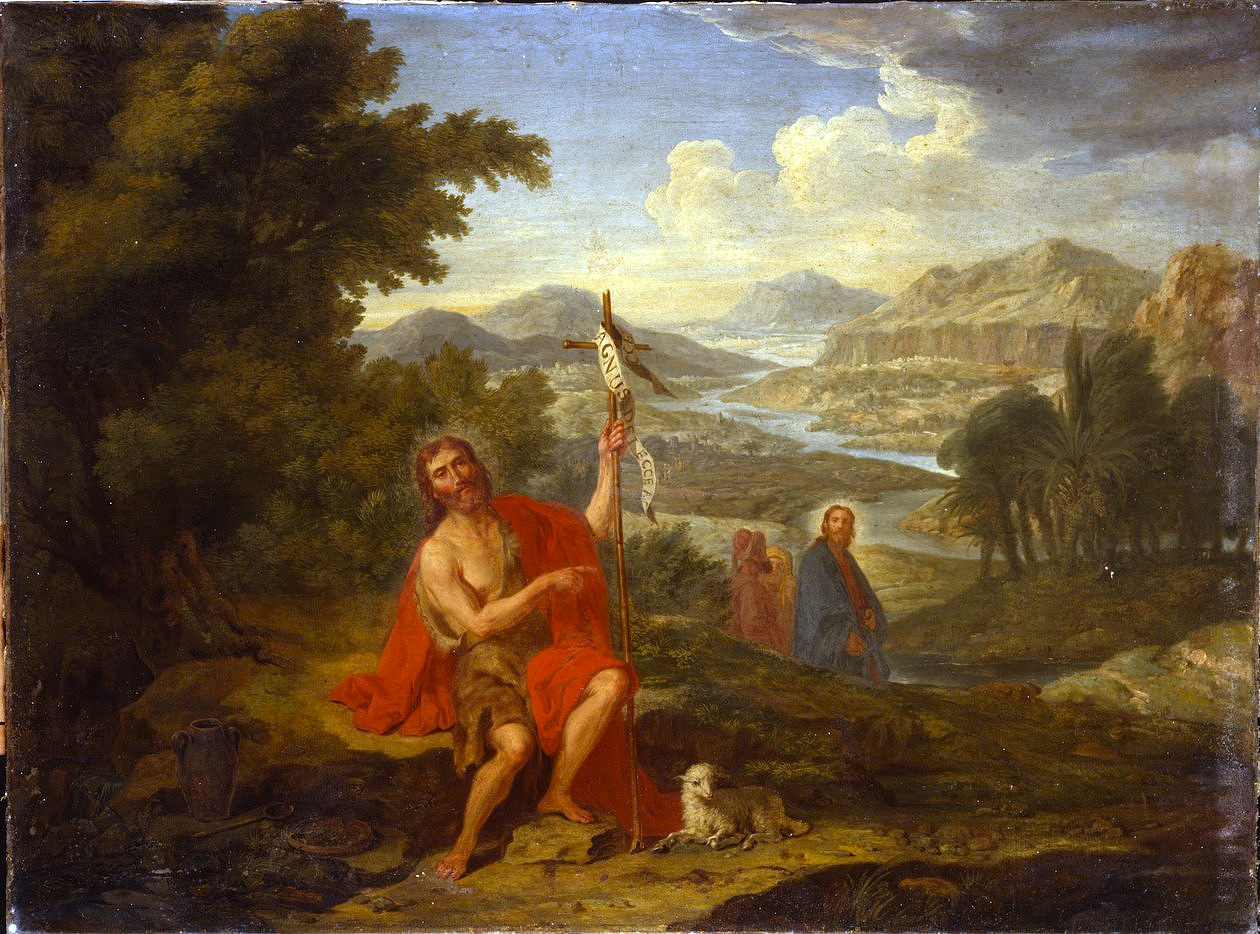
Antoine de Favray, 1759
Translation of the Holy Gospel According to Luke (3:1-6)
Now in the fifteenth year of the reign of Tiberius Caesar, Pontius Pilate being governor of Judea, and Herod being tetrarch of Galilee, and Philip his brother tetrarch of Iturea and the country of Trachonitis, and Lysanias tetrarch of Abilina, under the high-priests Annas and Caiphas: the word of the Lord was made unto John, the son of Zachary, in the desert. And he came into all the country about the Jordan, preaching the baptism of penance for the remission of sins, as it was written in the book of the sayings of Isaias the prophet: A voice of one crying in the wilderness: Prepare ye the way of the Lord: make straight His paths: every valley shall be filled: and every mountain and hill shall be brought low, and the crooked shall be made straight, and the rough ways plain: and all flesh shall see the salvation of God.
A Message from St. John Paul II’s “Homily for the Jubilee of Catechists and Religion Teachers,” Dec. 10th, 2000.
(emphasis in original)
“Prepare the way of the Lord, make his paths straight” (Luke 3:4). Today John the Baptist speaks to us in these words. In a certain sense, his ascetic figure embodies the meaning of this time of expectation and preparation for the Lord’s coming. In the desert of Judea he proclaims that the time has come for the fulfilment of the promises and that the kingdom of God is at hand: it is therefore urgent to forsake the ways of sin and believe in the Gospel (cf. Mark 1:15).
…
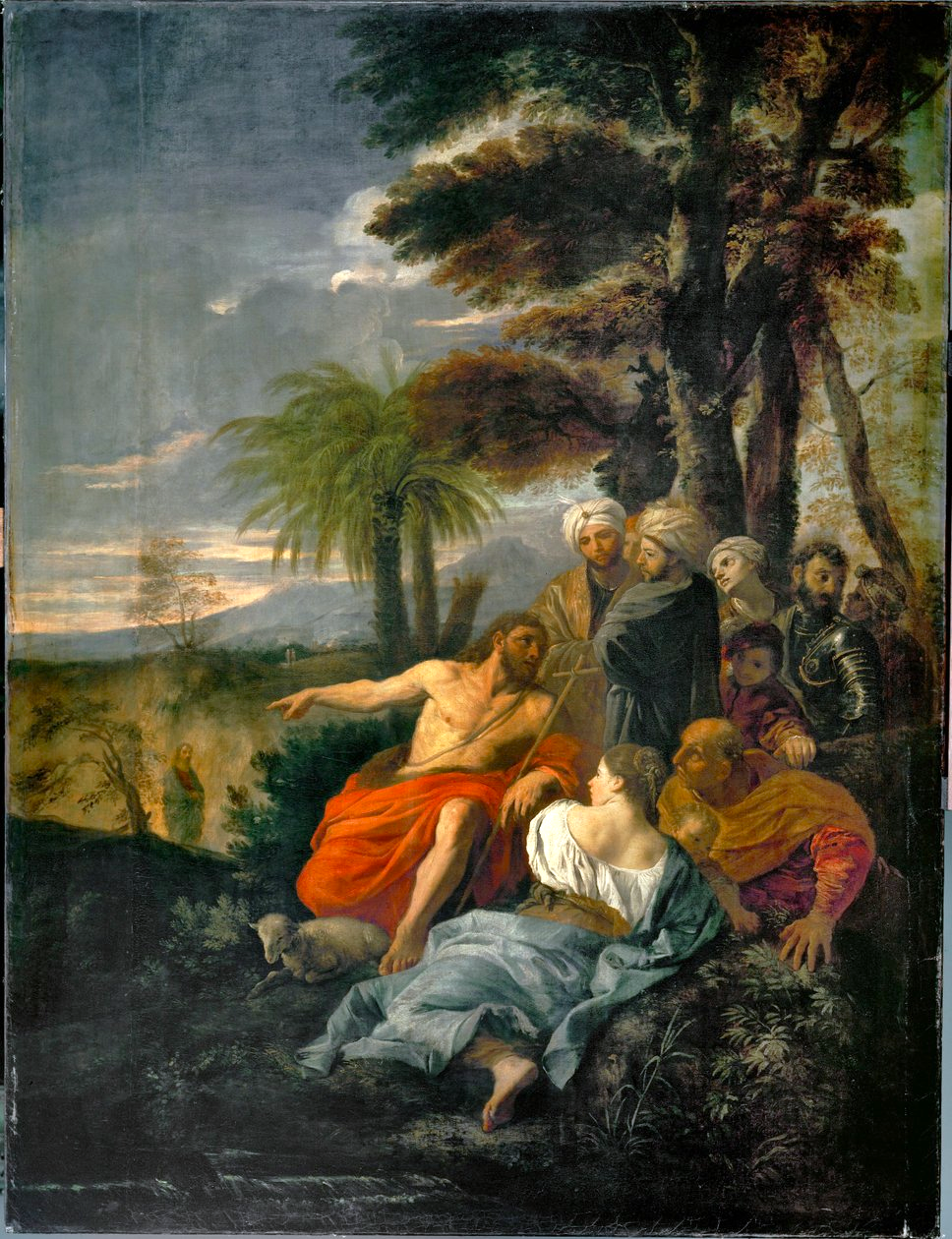
Pier Francesco Mola, cir. 17th c.
In the Baptist, you (catechists and religion teachers) are rediscovering today the fundamental features of ecclesial service. By taking him as your model, you are encouraged to examine the mission entrusted to you by the Church. Who is John the Baptist? First of all he is a believer personally committed to a demanding spiritual journey, consisting of attentive and constant listening to the Word of salvation. He also bears witness to a way of life that is detached and poor; he shows great courage in proclaiming God’s will to everyone, even to its ultimate consequences. He does not yield to the easy temptation to take a prominent role, but humbly lowers himself to exalt Jesus.
Like John the Baptist, the catechist too is called to point out Jesus as the awaited Messiah, the Christ. His task is to invite people to fix their gaze on Jesus and to follow him, for Jesus alone is the Teacher, the Lord and the Saviour. Like the Precursor, it is Christ and not himself whom the catechist must emphasize. Everything must be directed to him: to his coming, to his presence, to his mystery.
The catechist must be a voice that refers to the Word, a friend who leads to the Bridegroom. And yet, like John, he too is indispensable in a certain sense, because the experience of faith always needs a mediator who is also a witness. Who among us does not thank the Lord for an effective catechist – a priest, a man or woman religious, a lay person – to whom we owe our first practical and engaging explanation of the Christian mystery?
Your work, dear catechists and religion teachers, is more necessary than ever and requires on your part constant fidelity to Christ and to the Church. For all the faithful have a right to receive from those who, by office or mandate, are responsible for catechesis and preaching answers that are not subjective, but correspond with the Church’s constant Magisterium, with the faith that has always been taught authoritatively by those appointed teachers and lived exemplarily by the saints.
In this regard, I would like to recall here the important Apostolic Exhortation Quinque iam anni which the Servant of God Pope Paul VI addressed to the Catholic Episcopate five years after the Second Vatican Council… He, the Pope, denounced the dangerous tendency to reconstruct, on psychological and sociological foundations, a Christianity uprooted from the uninterrupted Tradition that goes back to the faith of the Apostles (cf. Insegnamenti di Paolo VI, VIII [1970], 1420). It is your task, dear friends, to collaborate with the Bishops, so that the necessary effort to make the message understandable to the men and women of our time will never betray the truth and continuity of the doctrine of the faith (cf. ibid., 1422).
However, an intellectual knowledge of Christ and his Gospel is not enough. For believing in him means following him. Therefore we must learn from the Apostles, from the confessors of the faith, from the saints of every age who helped to spread Christ’s name and to make it loved by the witness of a life generously and joyously spent for him and for their brethren.
In this regard, today’s Gospel passage invites us to make a careful examination of conscience. St Luke speaks of “ways to be made straight”, of “valleys to be filled”, of “mountains” and “hills to be brought low” so that all flesh may see the salvation of God (cf. Luke 3:4-6). These “valleys to be filled” make us think of the gap that can be seen in some people between the faith they profess and the daily life they lead: The Council counted this dichotomy as “one of the gravest errors of our time” (Gaudium et Spes, 43).
The “paths to be straightened” also recall the situation of some believers who extract from the complete and unchangeable patrimony of the faith certain subjectively selected elements, actually in the light of the dominant mentality, and abandon the straight path of Gospel spirituality to follow vague values inspired by a conventional and irenic moralism. In fact, although the Christian lives in a multiethnic and multireligious society, he cannot fail to sense the urgency of the missionary mandate which prompted St. Paul to exclaim: “Woe to me if I do not preach the Gospel!” (1 Col 9:16).
The Gospel of Christ, the message of happiness for every person, whatever his age, class, culture or nation, should be courageously presented in every circumstance, in every context, favourable or not.
…
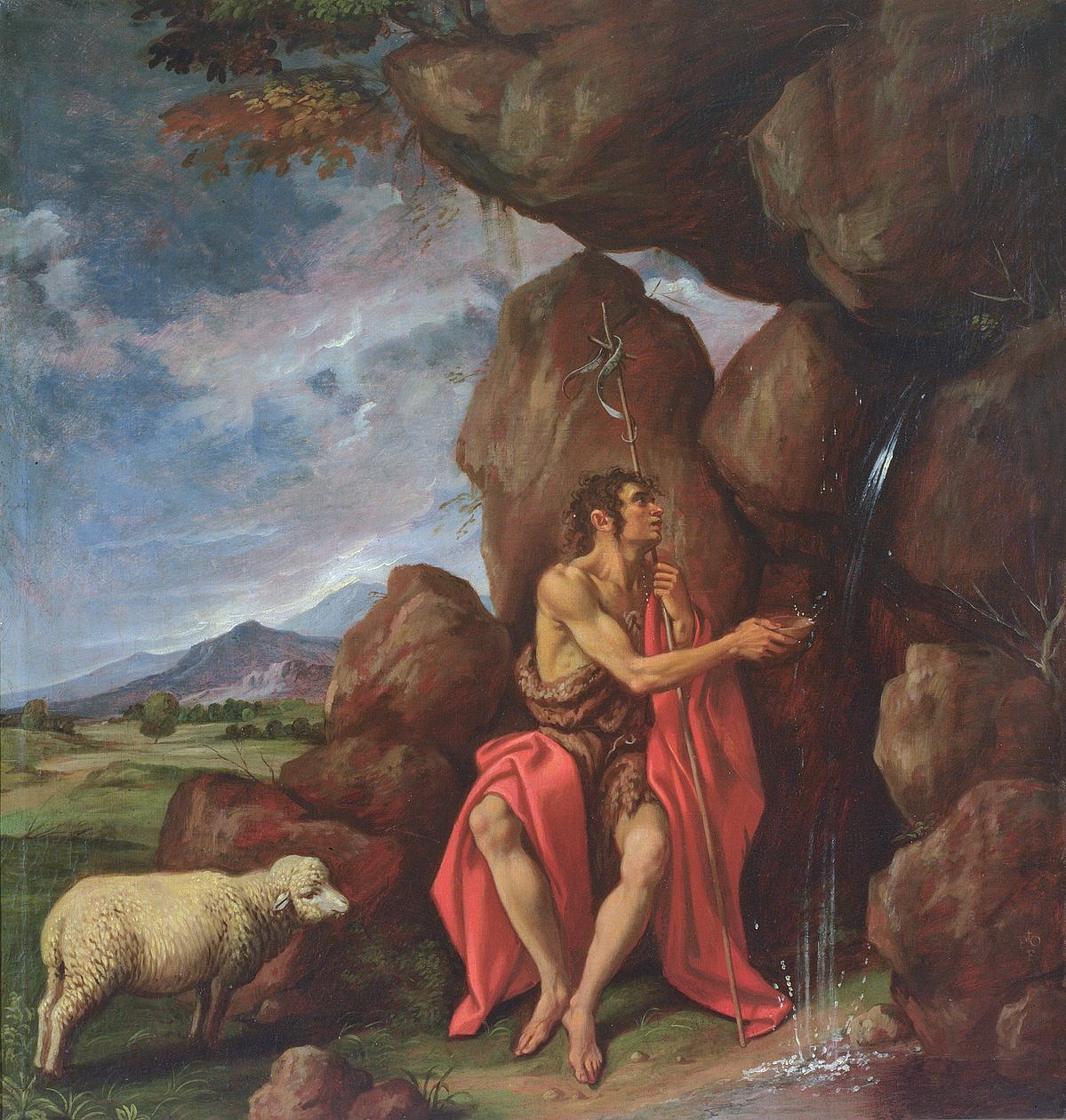
Pedro Orrente, cir. 17th c.
“All flesh shall see the salvation of God” (Luke 3:6), so said John the Baptist in the desert, foretelling the fullness of time. Let us make our own this cry of hope… May all flesh see in Christ the salvation of God! This is why every person must meet him, know him and follow him. Dear friends, this is the Church’s mission; this is your mission! The Pope tells you: Go! Like the Baptist, prepare the way for the Lord who comes.
May Mary Most Holy, Virgin of Advent and Star of the new evangelization, guide and help you. Be docile as she was to the divine Word and may her Magnificat spur you to praise and to prophetic courage. Thus the words of the Gospel will also be fulfilled through you: all flesh will see the salvation of God! Praised be Jesus Christ!