
Translation of the Gospel According to John (16:16-22)
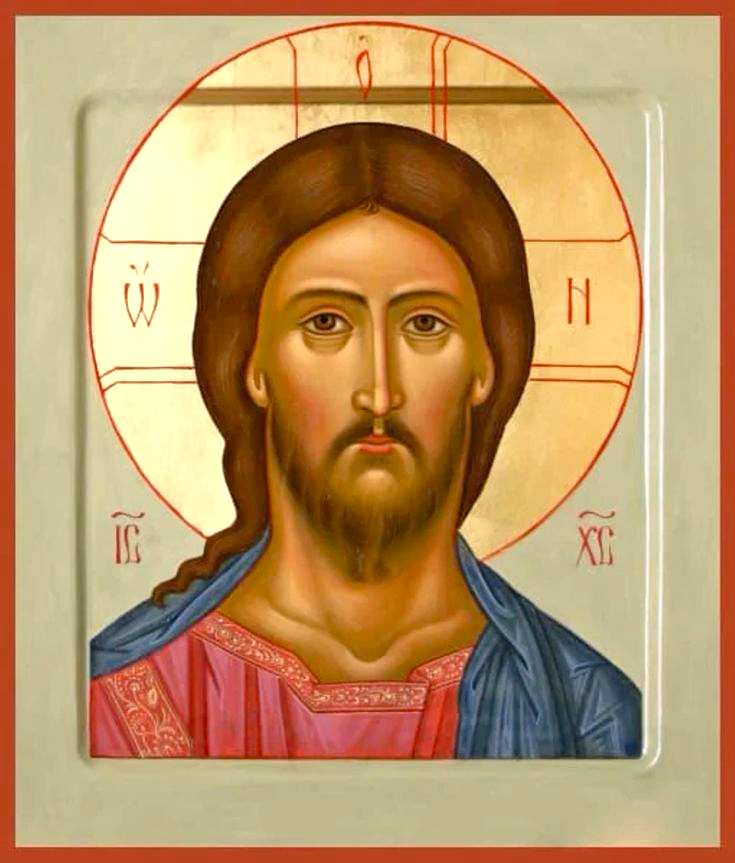
At that time. Jesus said to His disciples: A little while, and now you shall not see Me: and again a little while, and you shall see Me: because I go to the Father. Then some of His disciples said one to another: What is this that He saith to us: A little while, and you shall not see Me: and again a little while, and you shall see Me: because I go to the Father? They said therefore: What is this that He saith, A little while? We know not what He speaketh. And Jesus knew that they had a mind to ask Him. And He said to them: Of this do you inquire among yourselves, because I said: A little while, and you shall not see Me: and again a little while, and you shall see Me? Amen, amen, I say to you, that you shall lament and weep, but the world shall rejoice: and you shall be made sorrowful, but your sorrow shall be turned into joy. A woman, when she is in labor, hath sorrow, because her hour is come: but when she hath brought forth the child, she remembereth no more the anguish for joy that a man is born into the world. So also you now indeed have sorrow: but I will see you again and your heart shall rejoice: and your joy no man shall take from you.
A Message From St. John Chrysostom’s Homilies on the Gospel of John, LXXIX
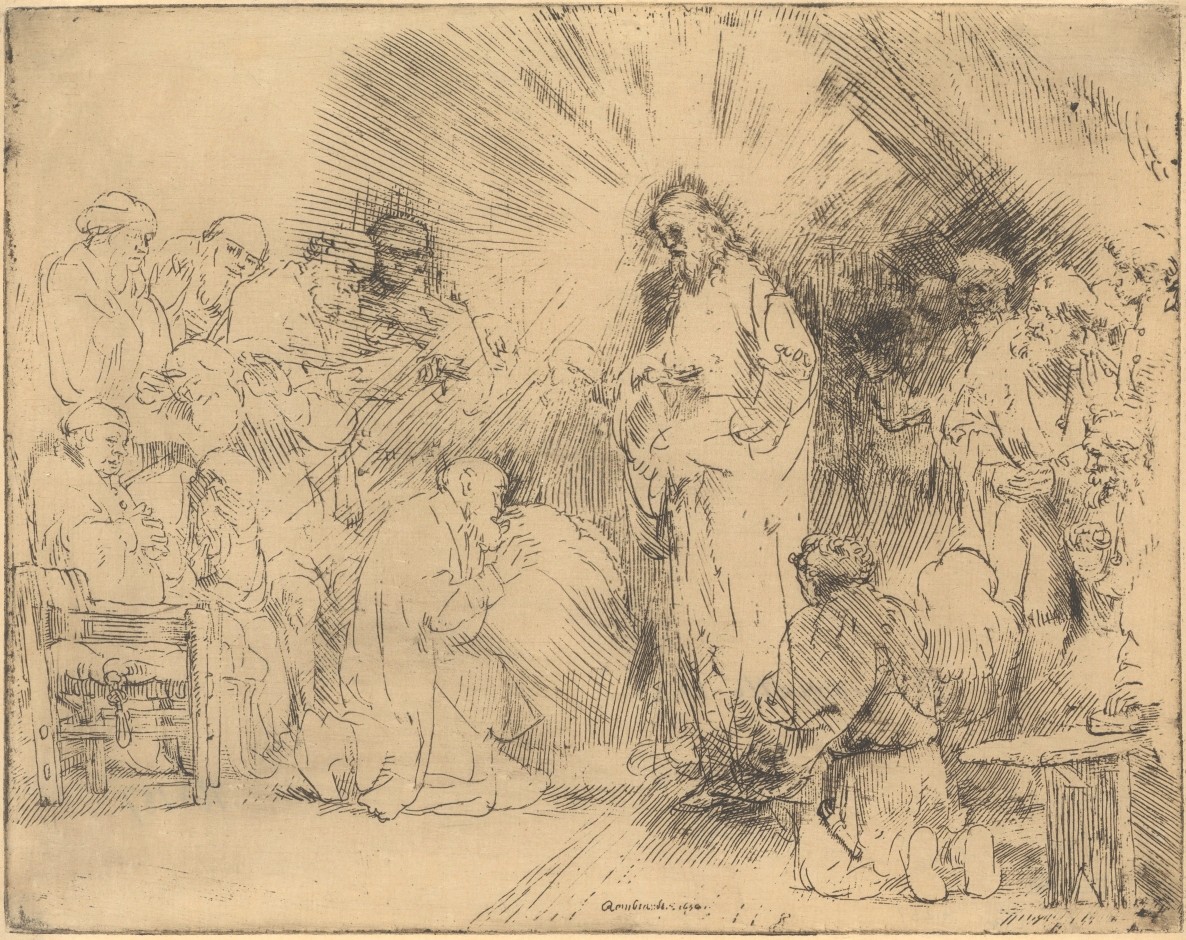
Rembrandt, 1656
Nothing is wont so to cast down the soul that is anguished and possessed by deep despondency, as when words which cause pain are continually dwelt upon. Why then did Christ, after saying, I go, and, Hereafter I will not speak with you, continually dwell on the same subject, saying A little while, and ye shall not see Me, because I go to Him that sent Me? When He had recovered them by His words concerning the Spirit, He again casteth down their courage. Wherefore doth He this? He testeth their feelings, and rendereth them more proved, and well accustometh them by hearing sad things, manfully to bear separation from Him; for they who had practiced this when spoken of in words, were likely in actions also, easily to bear it afterwards. And if one enquires closely, this very thing is a consolation, the saying that, I go to the Father. For it is the expression of One, who declares that He shall not perish, but that His end is a kind of translation. He addeth too another consolation; for He saith not merely, A little while, and ye shall not see Me, but also, A little while, and ye shall see Me; showing that He will both come to them again, and that their separation would be but for a little while, and His presence with them continual. This, however, they did not understand. Whence one may with reason wonder how, after having often heard these things, they doubt, as though they had heard nothing. How then is it that they did not understand? It was either through grief, as I suppose, for that drove what was said from their understanding; or through the obscurity of the words. Because He seemed to them to set forth two contraries, which were not contrary. If, saith one of them, we shall see Thee, whither goest Thou? And if Thou goest, how shall we see Thee? Therefore they say, We cannot tell what He saith. That He was about to depart, they knew; but they knew not that He would shortly come to them. On which account He rebuketh them, because they did not understand His saying. For, desiring to infix in them the doctrine concerning His death, what saith He?
Verily, verily, I say unto you, That ye shall weep and lament—which belonged to the Death and the Cross—but the world shall rejoice.
Because by reason of their not desiring His death, they quickly ran into the belief that He would not die, and then when they heard that He would die, cast about, not knowing what that “little” meant, He saith, Ye shall mourn and lament. But your sorrow shall be turned into joy. Then having shown that after grief comes joy, and that grief gendereth joy, and that grief is short, but the pleasure endless, He passeth to a common example; and what saith He?
A woman when she is in travail hath sorrow. And He hath used a comparison which the Prophets also use continually, likening despondencies to the exceeding pains of childbirth. But what He saith is of this kind: Travail pains shall lay hold on you, but the pang of childbirth is the cause of joy; both confirming His words relative to the Resurrection, and showing that the departing hence is like passing from the womb into the light of day. As though He had said, Marvel not that I bring you to your advantage through such sorrow, since even a mother to become a mother, passeth in like manner through pain. Here also He implieth something mystical, that He hath loosened the travail pangs of death, and caused a new man to be born of them. And He said not, that the pain shall pass away only, but, she doth not even remember it, so great is the joy which succeedeth; so also shall it be with the Saints. And yet the woman doth not rejoice because a man hath come into the world, but because a son hath been born to her; since, had this been the case, nothing would have hindered the barren from rejoicing over another who beareth. Why then spake He thus? Because He introduced this example for this purpose only, to show that sorrow is for a season, but joy lasting: and to show that (death) is a translation unto life; and to show the great profit of their pangs. He said not, a “child hath been born,” but, A man. For to my mind He here alludeth to His own Resurrection, and that He should be born not unto that death which bare the birth-pang, but unto the Kingdom. Therefore He said not, “a child hath been born unto her,” but, A man hath been born into the world.
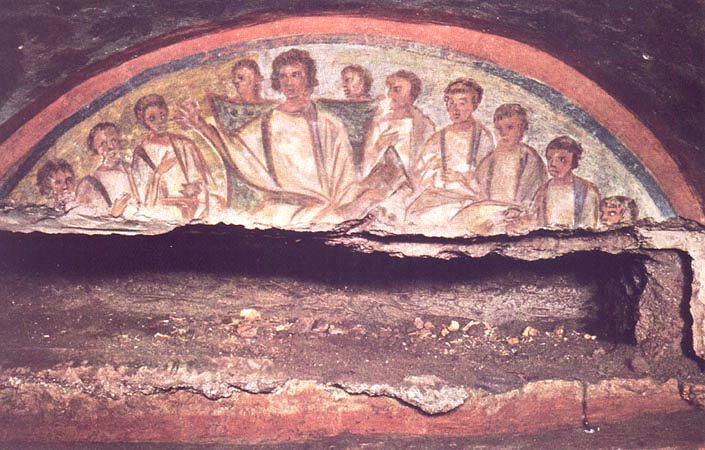
Catacomb of Domitilla, Rome,
late 3rd/early 4th c.
And ye now therefore have sorrow—[but I will see you again, and your sorrow shall be turned into joy]. Then, to show that He shall die no more, He saith, And no man taketh it from you. And in that day ye shall ask Me nothing. Again, He proveth nothing else by these words, but that He is from God. For then ye shall for the time to come know all things. But what is, “Ye shall not ask Me? Ye shall need no intercessor, but it is sufficient that ye call on My Name, and so gain all things.