
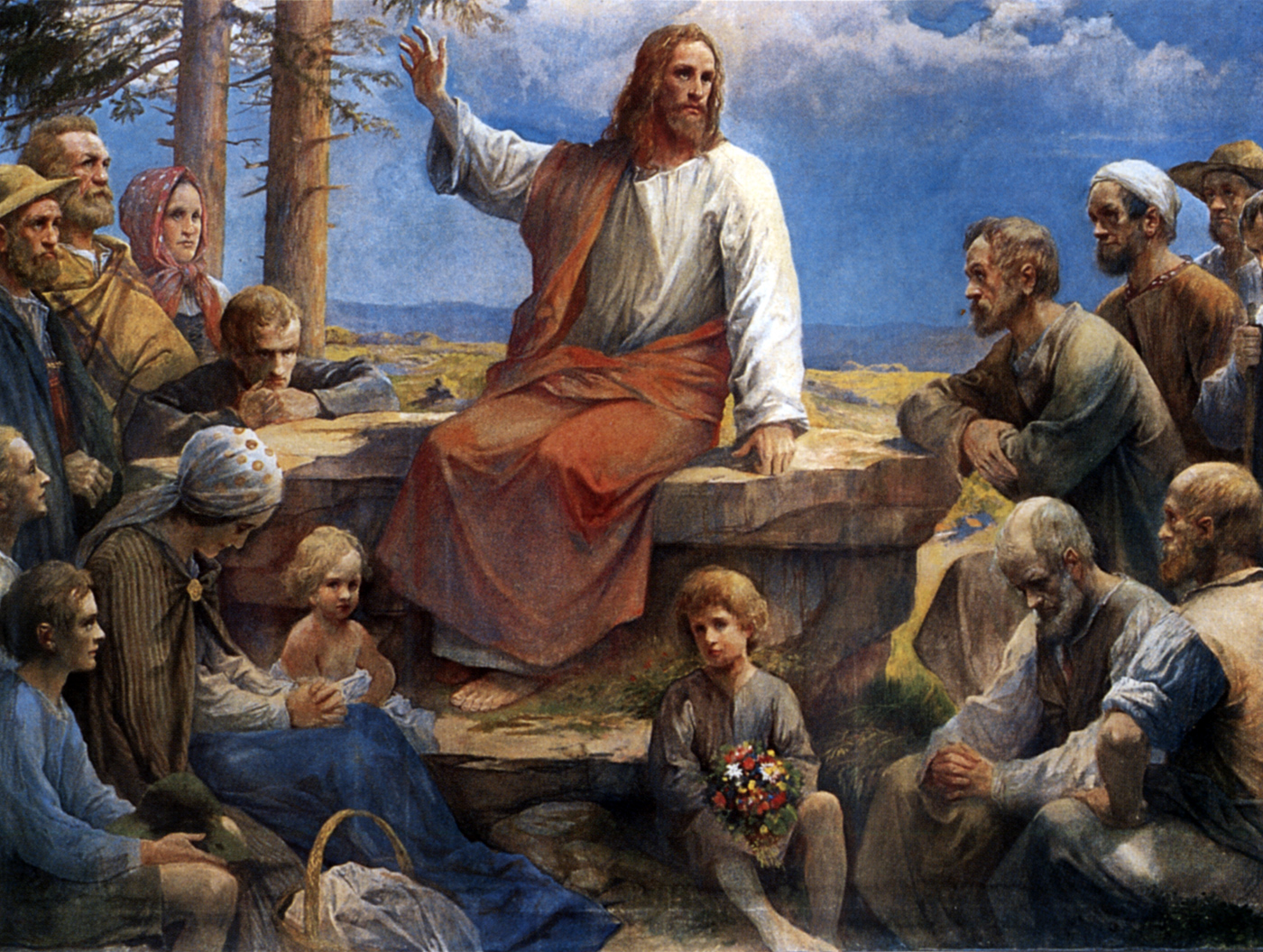
Rudolf Yelin, 1912
Translation of the Gospel According to John (John 16:5-14)
At that time Jesus said to His disciples: I go to Him that sent Me: and none of you asketh Me: Whither goest Thou? But because I have spoken these things to you, sorrow hath filled your heart. But I tell you the truth: it is expedient to you that I go: for if I go not, the Paraclete will not come to you: but if I go, I will send Him to you. And when He is come, He will convince the world of sin, and of justice and of judgment. Of sin, because they believed not in Me: of justice, because I go to the Father, and you shall see Me no longer: of judgment, because the prince of this world is already judged. I have yet many things to say to you; but you cannot bear them now. But when He, the Spirit of truth, is come, He will teach you all truth. For He shall not speak of Himself: but what things soever He shall hear He shall speak, and the things that are to come, He shall show you. He shall glorify Me: because He shall receive of Mine and shall show it to you.
A Message From St. Pope John Paul II’s Veritatis Splendor
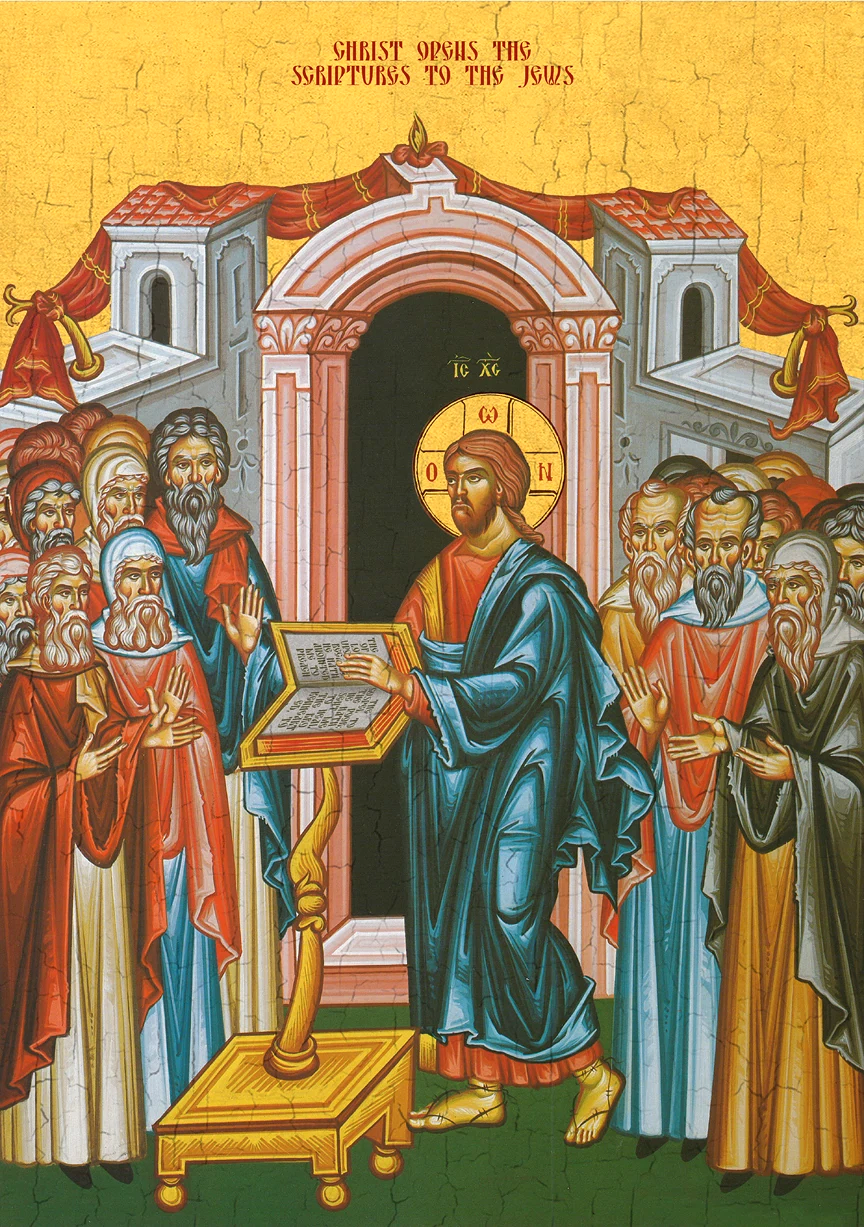
Come, follow me (Matt 19:21)
The way and at the same time the content of perfection consists in the following of Jesus, sequela Christi, once one has given up one’s own wealth and very self. This is precisely the conclusion of Jesus’ conversation with the young man: Come, follow me (Matt 19:21). It is an invitation the marvellous grandeur of which will be fully perceived by the disciples after Christ’s Resurrection, when the Holy Spirit leads them to all truth (cf. John 16:13).
It is Jesus himself who takes the initiative and calls people to follow him. His call is addressed first to those to whom he entrusts a particular mission, beginning with the Twelve; but it is also clear that every believer is called to be a follower of Christ (cf. Acts 6:1). Following Christ is thus the essential and primordial foundation of Christian morality: just as the people of Israel followed God who led them through the desert towards the Promised Land (cf. Exo 13:21), so every disciple must follow Jesus, towards whom he is drawn by the Father himself (cf. John 6:44).
This is not a matter only of disposing oneself to hear a teaching and obediently accepting a commandment. More radically, it involves holding fast to the very person of Jesus, partaking of his life and his destiny, sharing in his free and loving obedience to the will of the Father. By responding in faith and following the one who is Incarnate Wisdom, the disciple of Jesus truly becomes a disciple of God (cf. John 6:45). Jesus is indeed the light of the world, the light of life (cf. John 8:12). He is the shepherd who leads his sheep and feeds them (cf. John 10:11-16); he is the way, and the truth, and the life (cf. John 14:6). It is Jesus who leads to the Father, so much so that to see him, the Son, is to see the Father (cf. Jn 14:6-10). And thus to imitate the Son, the image of the invisible God (Col 1:15), means to imitate the Father.
Jesus asks us to follow him and to imitate him along the path of love, a love which gives itself completely to the brethren out of love for God: This is my commandment, that you love one another as I have loved you (John 15:12). The word “as” requires imitation of Jesus and of his love, of which the washing of feet is a sign: If I then, your Lord and Teacher, have washed your feet, you also ought to wash one another’s feet. For I have given you an example, that you should do as I have done to you (John 13:14-15). Jesus’ way of acting and his words, his deeds and his precepts constitute the moral rule of Christian life. Indeed, his actions, and in particular his Passion and Death on the Cross, are the living revelation of his love for the Father and for others. This is exactly the love that Jesus wishes to be imitated by all who follow him. It is the “new” commandment: A new commandment I give to you, that you love one another; even as I have loved you, that you also love one another. By this all men will know that you are my disciples, if you have love for one another (John 13:34-35).
The word “as” also indicates the degree of Jesus’ love, and of the love with which his disciples are called to love one another. After saying: This is my commandment, that you love one another as I have loved you (John 15:12), Jesus continues with words which indicate the sacrificial gift of his life on the Cross, as the witness to a love to the end (John 13:1): Greater love has no man than this, that a man lay down his life for his friends (John 15:13).
As he calls the young man to follow him along the way of perfection, Jesus asks him to be perfect in the command of love, in “his” commandment: to become part of the unfolding of his complete giving, to imitate and rekindle the very love of the “Good” Teacher, the one who loved “to the end”. This is what Jesus asks of everyone who wishes to follow him: If any man would come after me, let him deny himself and take up his cross and follow me (Matt 16:24).
Following Christ is not an outward imitation, since it touches man at the very depths of his being. Being a follower of Christ means becoming conformed to him who became a servant even to giving himself on the Cross (cf. Phil 2:5-8). Christ dwells by faith in the heart of the believer (cf. Eph 3:17), and thus the disciple is conformed to the Lord. This is the effect of grace, of the active presence of the Holy Spirit in us.
Having become one with Christ, the Christian becomes a member of his Body, which is the Church (cf. Cor 12:13, 27). By the work of the Spirit, Baptism radically configures the faithful to Christ in the Paschal Mystery of death and resurrection; it “clothes him” in Christ (cf. Gal 3:27): Let us rejoice and give thanks, exclaims Saint Augustine speaking to the baptized, “for we have become not only Christians, but Christ (…). Marvel and rejoice: we have become Christ! (In Iohannis Evangelium Tractatus, 21, 8). Having died to sin, those who are baptized receive new life (cf. Rom 6:3-11): alive for God in Christ Jesus, they are called to walk by the Spirit and to manifest the Spirit’s fruits in their lives (cf. Gal 5:16-25). Sharing in the Eucharist, the sacrament of the New Covenant (cf. 1 Cor 11:23-29), is the culmination of our assimilation to Christ, the source of “eternal life” (cf. John 6:51-58), the source and power of that complete gift of self, which Jesus m according to the testimony handed on by Paul m commands us to commemorate in liturgy and in life: As often as you eat this bread and drink the cup, you proclaim the Lord’s death until he comes (1 Cor 11:26).
…
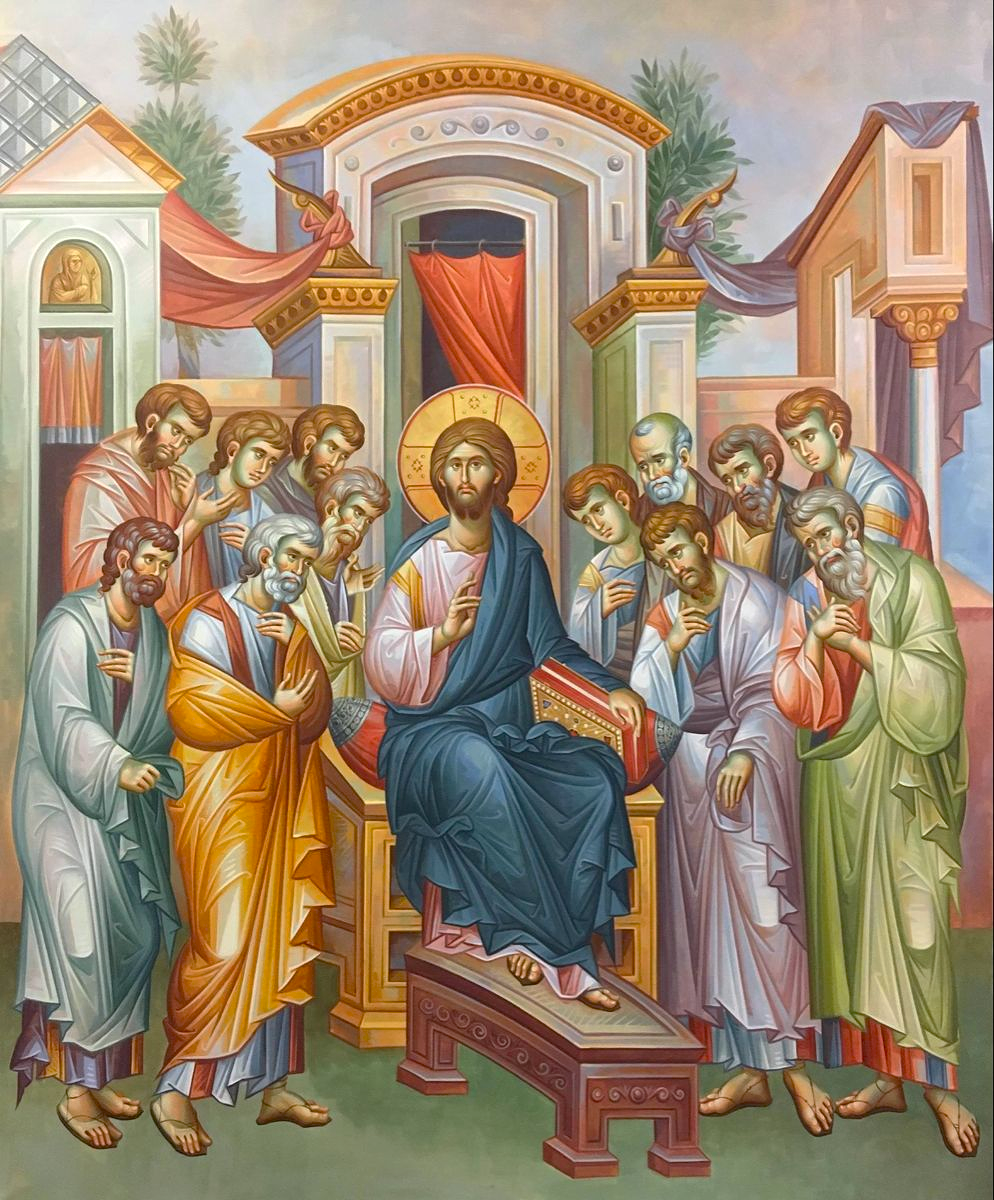
To imitate and live out the love of Christ is not possible for man by his own strength alone. He becomes capable of this love only by virtue of a gift received. As the Lord Jesus receives the love of his Father, so he in turn freely communicates that love to his disciples: As the Father has loved me, so have I loved you; abide in my love (John 15:9). Christ’s gift is his Spirit, whose first “fruit” (cf. Gal 5:22) is charity: God’s love has been poured into our hearts through the Holy Spirit which has been given to us (Rom 5:5). Saint Augustine asks: Does love bring about the keeping of the commandments, or does the keeping of the commandments bring about love? And he answers: But who can doubt that love comes first? For the one who does not love has no reason for keeping the commandments (In Iohannis Evangelium Tractatus, 82, 3).