
Translation of the Epistle for the Fifth Sunday After Easter (Jas 1: 22-27)
Dearly beloved, be ye doers of the word and not hearers only, deceiving your own selves, For if a man be a hearer of the word and not a doer, he shall be compared to a man beholding his own countenance in a glass: for he beheld himself and went his way, and presently forgot what manner of man he was. But he that hath looked into the perfect law of liberty and hath continued therein, not becoming a forgetful hearer but a doer of the work: this man shall be blessed in his deed. And if any man think himself to be religious, not bridling his tongue but deceiving his own heart, this man’s religion is vain. Religion clean and undefiled before God and the Father is this: To visit the fatherless and widows in their tribulation, and to keep one’s self unspotted from this world.
Continuation of the Holy Gospel According to St. John (16: 23-30)
At that time Jesus saith to His disciples: Amen, amen, I say to you: if you ask the Father any thing in My name, He will give it to you. Hitherto you have not asked any thing in my name: Ask, and you shall receive, that your joy may be full. These things I have spoken to you in proverbs. The hour cometh when I will no more speak to you in proverbs, but I will show you plainly of the Father. In that day you shall ask in My name; and I say not to you that I will ask the Father for you: for the Father Himself loveth you, because you have loved Me and have believed that I came out from God. I came forth from the Father and am come into the world; again I leave the world and I go to the Father. His disciples say to Him: Behold, now Thou speakest plainly and speakest no proverb. Now we know that Thou knowest all things and Thou needest not that any man should ask of Thee: by this we believe that Thou camest forth from God.
The Saving Words of the Gospel.
In the Name of the Father, and of the Son, and of the Holy Spirit. Amen.
Transcription of Homily
If you ask anything in My Name, says our Lord. What does this mean? We see, in Acts 19, when the sons of Sceva, those itinerant exorcists, attempted to exorcise the possessed man in the Name of Jesus, and they said the Name, and it didn’t go so well for them. So, what does it mean to ask in the Name of Jesus? Is it merely use of language?
Well, if we look at Exodus 20:7, we start to understand what it means to bear the Name of God. And in this, we recognize the Third Commandment in Exodus 20:7, Thou shall not take the Name of thy Lord in vain. And what is this? Does it simply regard expletives that include the Holy Name? Not only. That’s a rather minimalist understanding of the Commandment. It’s not just about speech. Of course, to misuse the Holy Name in speech won’t help us at all on Judgment Day, and we ought to be very careful of our speech, as James tells us in today’s Epistle. But notice that the Commandment doesn’t say “use the Name.” It says, take the name. To bear it. In Hebrew, it’s נָשָׂא (nasa), which means to lift, or to bear, or to represent, like an ambassador who represents a government. And so, this is not merely about speech.
When the Roman legionaries were incorporated into their respective legions, it was a proud day for the soldier, and they would take the name of their centurion. They would write his name on their backpacks, on their military articles, because they belonged to this name. And this had a unifying effect for the soldiers. There was a certain pride in bearing the name of their superior.
When we read that, the Commandment, the Third Commandment, further, it says, in vain. That’s how we translate it. James uses the word here as well. In Hebrew, it’s שָׁוְא (shav’), which means empty, hollow, worthless. So, the Commandment regards not merely misuse of the Name of Our Lord but acting in a way that doesn’t correspond to who He is, and therefore, who we are.
The Holy Name is not a label; it’s our Lord’s identity. When we take it, it means we take it upon ourselves. It’s a mission, it’s a vocation, it’s an identity that we have as Christians. So, as Christian, as Catholic, that becomes our Name. We are to become “Christ in time.” This is not merely about speech.
In the ancient Near East, when a lesser nation entered into a vassal relationship with a stronger, more powerful nation, it took the name of the more powerful king. And so, when we take the Name of Our Lord in vain, when we bear it in a hollow way, it means that we’ve broken our relationship with Him. The Lord will not hold him guiltless who takes the Name of the Lord in vain.
And then Our Lord says, this people honors me with their lips, but their heart is far from me in vain. Do they worship me? This in vain – same notion of hollow emptiness. So, this is more about hypocrisy than speech regulations. It’s about an identity that has been appropriated but not lived up to. And this is exactly when you read Jeremiah, Ezekiel, Isaiah; this is what they’re criticizing Israel about, that they’re hypocrites. They have received all of these blessings from God, and they are hypocrites. They don’t represent Him before the Gentiles, but actually, they start to imitate the Gentiles.
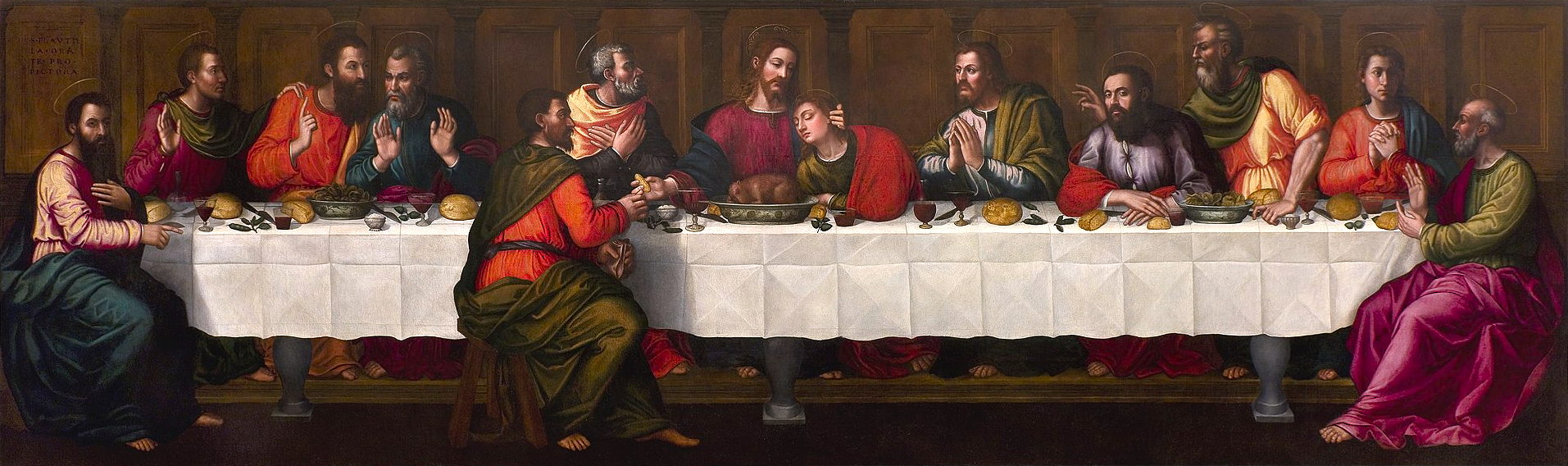
In the Last Supper, Our Lord says, I have manifested Your Name before the people you gave Me. And then He again says to the Father, I have made Your Name known and will continue to make It known. So, clearly, this notion of the Name is not merely about titles or speech. And so, Christ did what Israel failed at over and over, by bearing the Name of God in a perfect way. His identity with the Father was perfect. In Christ, there is no hollowness, nothing on the margins of perfection. He bore the Name of God perfectly.
On the other hand, in Revelations 13, we see those who receive the name of the Beast, the antichrist. And so, this is not merely a title. It’s something transactional, constitutive. It’s an identity. And therefore, all of salvation history is a conflict between the two names. And which one do I manifest? Which one do I identify with? Which one do I live up to? There’s no spiritual Switzerland. Nobody’s allowed to be neutral in this conflict. So, any conflict in our own lives that is not in keeping with the dignity of Christ then becomes a form of hypocrisy, a form of taking the name of God in vain.
So, back to the original statement from the Gospel, to ask something in God’s Name means that I’m already configured with His will. I want what He wants. There aren’t any disagreements. There’s no dissonance between what I want and He wants because I’ve discovered His will. I’m trying my best to conform myself to His will.
When St. Gertrude was shown the souls in purgatory, and Our Lord said, “I want you to pick 10 souls to be released from Purgatory.” She said she intuited which ones God wanted her to pick. And so, she chose those. This is what it really means to ask something in God’s Name. It’s not some magical usage of the name of Jesus in hopes of getting something, but rather it means that this relationship is real. It’s living, it’s thriving. And when I ask for something, it’s because it’s His will.