
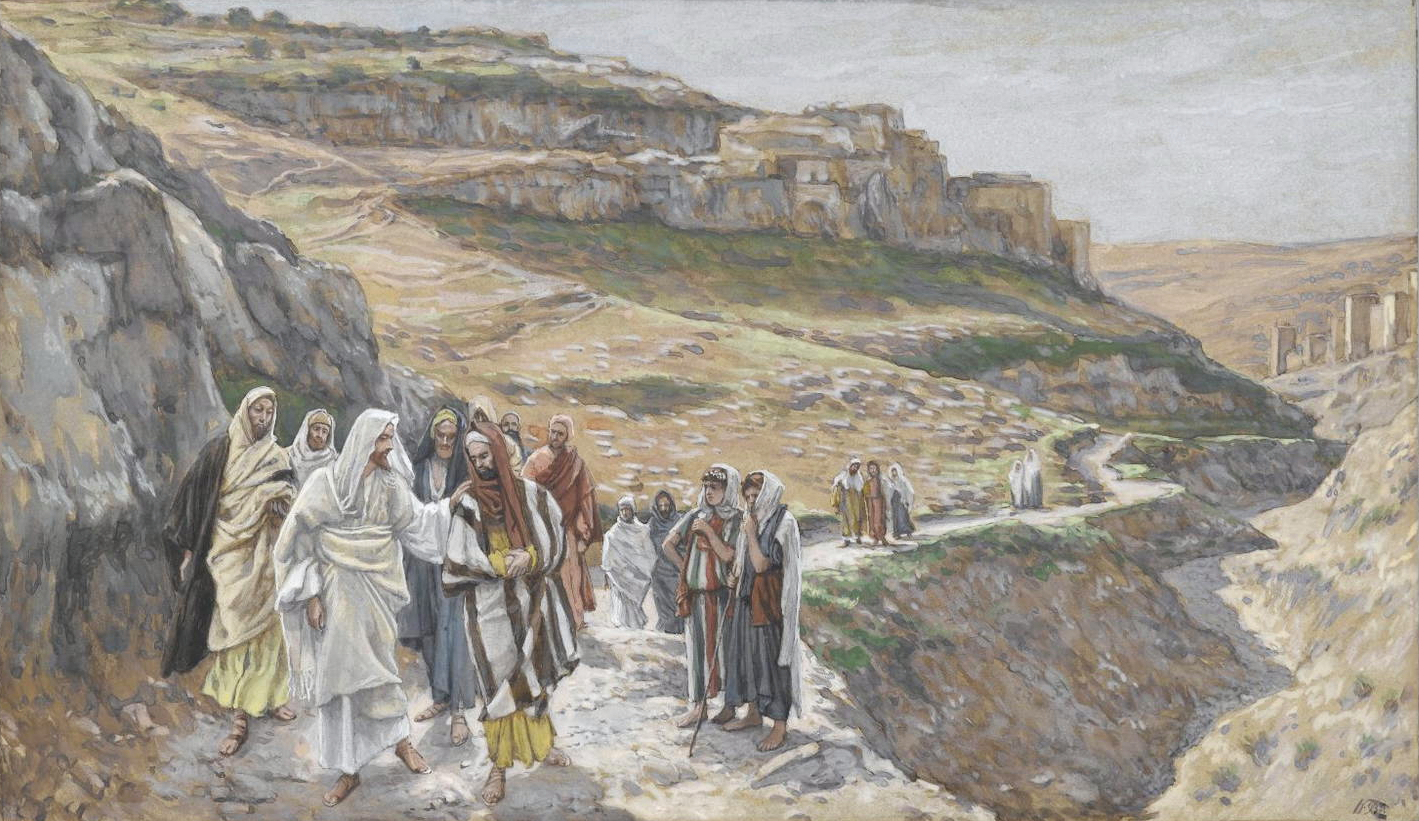
James Tissot, 1886-96
Continuation of the Holy Gospel According to Matthew (28:18-20)
At that time, Jesus said to His disciples, All power is given to Me in heaven and on earth. Go therefore, teach ye all nations, baptizing them in the name of the Father and of the Son and of the Holy Spirit, teaching them to observe all things whatsoever I have commanded you. And behold I am with you all days, even to the consummation of the world.
A Message From Dominus Iesus
The Lord Jesus, before ascending into heaven, commanded his disciples to proclaim the Gospel to the whole world and to baptize all nations: Go into the whole world and proclaim the Gospel to every creature. He who believes and is baptized will be saved; he who does not believe will be condemned (Mark 16:15-16); All power in heaven and on earth has been given to me. Go therefore and teach all nations, baptizing them in the name of the Father, and of the Son, and of the Holy Spirit, teaching them to observe all that I have commanded you. And behold, I am with you always, until the end of the world” (Matt 28:18-20; cf. Luke 24:46-48; John 17:18,20,21; Acts 1:8).
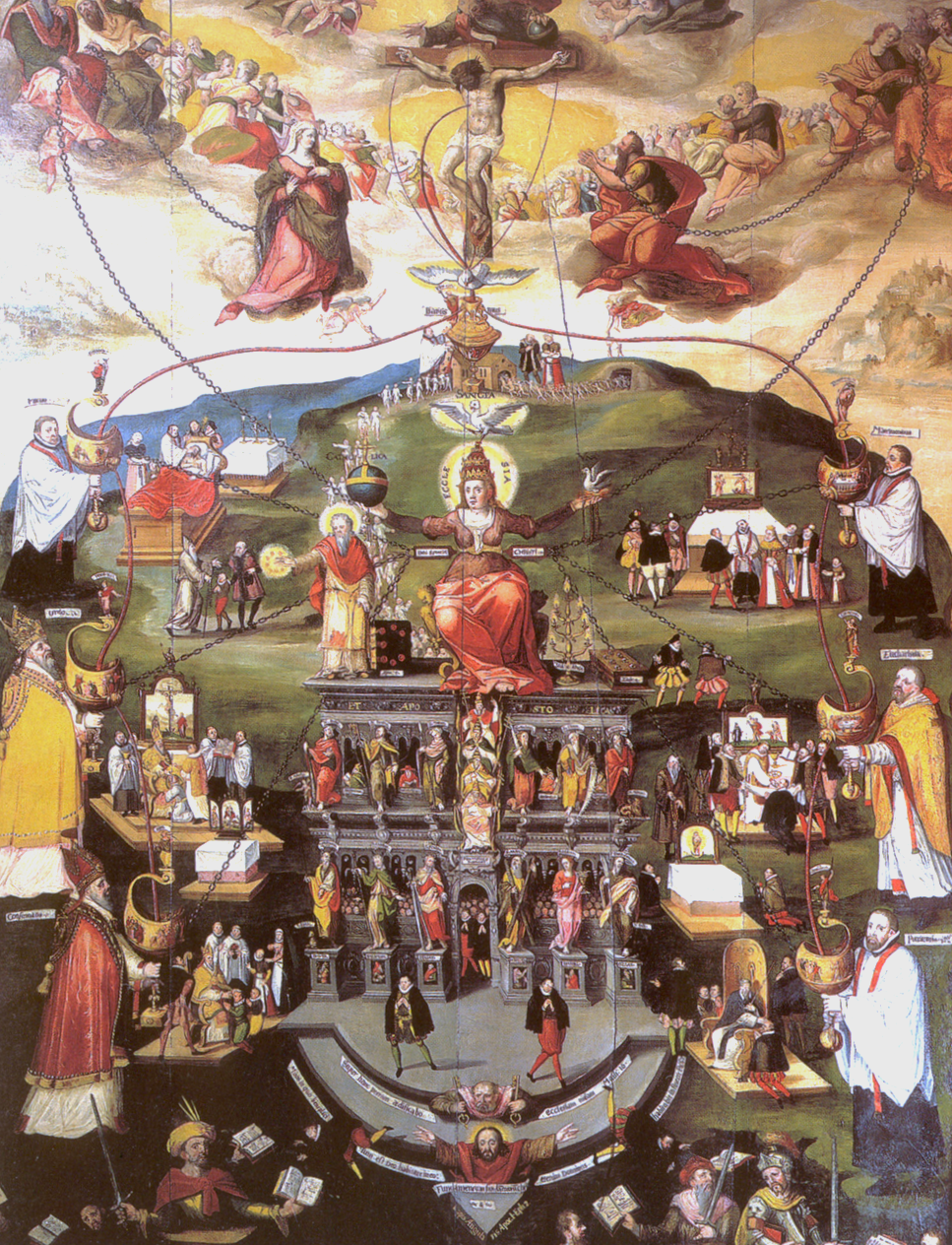
The Church’s universal mission is born from the command of Jesus Christ and is fulfilled in the course of the centuries in the proclamation of the mystery of God, Father, Son, and Holy Spirit, and the mystery of the incarnation of the Son, as saving event for all humanity. The fundamental contents of the profession of the Christian faith are expressed thus: I believe in one God, the Father, Almighty, maker of heaven and earth, of all that is, seen and unseen. I believe in one Lord, Jesus Christ, the only Son of God, eternally begotten of the Father, God from God, Light from Light, true God from true God, begotten, not made, of one being with the Father. Through him all things were made. For us men and for our salvation, he came down from heaven: by the power of the Holy Spirit he became incarnate of the Virgin Mary, and became man. For our sake he was crucified under Pontius Pilate; he suffered death and was buried. On the third day he rose again in accordance with the Scriptures; he ascended into heaven and is seated at the right hand of the Father. He will come again in glory to judge the living and the dead, and his kingdom will have no end. I believe in the Holy Spirit, the Lord, the giver of life, who proceeds from the Father. With the Father and the Son he is worshipped and glorified. He has spoken through the prophets. I believe in one holy catholic and apostolic Church. I acknowledge one baptism for the forgiveness of sins. I look for the resurrection of the dead, and the life of the world to come.1
…
With the coming of the Saviour Jesus Christ, God has willed that the Church founded by him be the instrument for the salvation of all humanity (cf. Acts 17:30-31).90 This truth of faith does not lessen the sincere respect which the Church has for the religions of the world, but at the same time, it rules out, in a radical way, that mentality of indifferentism characterized by a religious relativism which leads to the belief that ‘one religion is as good as another”.91 If it is true that the followers of other religions can receive divine grace, it is also certain that objectively speaking they are in a gravely deficient situation in comparison with those who, in the Church, have the fullness of the means of salvation.92 However, all the children of the Church should nevertheless remember that their exalted condition results, not from their own merits, but from the grace of Christ. If they fail to respond in thought, word, and deed to that grace, not only shall they not be saved, but they shall be more severely judged.93 One understands then that, following the Lord’s command (cf. Matt 28:19-20) and as a requirement of her love for all people, the Church proclaims and is in duty bound to proclaim without fail, Christ who is the way, the truth, and the life (John 14:6). In him, in whom God reconciled all things to himself (cf. 2 Cor 5:18-19), men find the fullness of their religious life.94
In inter-religious dialogue as well, the mission ad gentes today as always retains its full force and necessity.95 Indeed, God -desires all men to be saved and come to the knowledge of the truth’ (1 Tim 2:4); that is, God wills the salvation of everyone through the knowledge of the truth. Salvation is found in the truth. Those who obey the promptings of the Spirit of truth are already on the way of salvation. But the Church, to whom this truth has been entrusted, must go out to meet their desire, so as to bring them the truth. Because she believes in God’s universal plan of salvation, the Church must be missionary. 96 Inter-religious dialogue, therefore, as part of her evangelizing mission, is just one of the actions of the Church in her mission ad gentes.97 Equality, which is a presupposition of inter-religious dialogue, refers to the equal personal dignity of the parties in dialogue, not to doctrinal content, nor even less to the position of Jesus Christ – who is God himself made man – in relation to the founders of the other religions. Indeed, the Church, guided by charity and respect for freedom,98 must be primarily committed to proclaiming to all people the truth definitively revealed by the Lord, and to announcing the necessity of conversion to Jesus Christ and of adherence to the Church through Baptism and the other sacraments, in order to participate fully in communion with God, the Father, Son and Holy Spirit. Thus, the certainty of the universal salvific will of God does not diminish, but rather increases the duty and urgency of the proclamation of salvation and of conversion to the Lord Jesus Christ.
…
Julius Schiller, Coelum Stellatum Christiannum, 1627
In treating the question of the true religion, the Fathers of the Second Vatican Council taught: We believe that this one true religion continues to exist in the Catholic and Apostolic Church, to which the Lord Jesus entrusted the task of spreading it among all people. Thus, he said to the Apostles: ‘Go therefore and make disciples of all nations baptizing them in the name of the Father and of the Son and of the Holy Spirit, teaching them to observe all that I have commanded you’ (Matt 28: 19-20). Especially in those things that concern God and his Church, all persons are required to seek the truth, and when they come to know it, to embrace it and hold fast to it.99
The revelation of Christ will continue to be the true lodestar” 100 in history for all humanity: The truth, which is Christ, imposes itself as an all-embracing authority. 101 The Christian mystery, in fact, overcomes all barriers of time and space, and accomplishes the unity of the human family: From their different locations and traditions all are called in Christ to share in the unity of the family of God’s children… Jesus destroys the walls of division and creates unity in a new and unsurpassed way through our sharing in his mystery. This unity is so deep that the Church can say with Saint Paul: ‘You are no longer strangers and sojourners, but you are saints and members of the household of God‘ (Eph 2:19). 102
(1) First Council of Constantinople, Symbolum Constantinopolitanum: DS 150.
(90) Cf. Second Vatican Council, Dogmatic Constitution Lumen gentium, 17; John Paul II, Encyclical Letter Redemptoris missio, 11.
(91) John Paul II, Encyclical Letter Redemptoris missio, 36.
(92) Cf. Pius XII, Encyclical Letter Mystici corporis: DS 3821.
(93) Second Vatican Council, Dogmatic Constitution Lumen gentium, 14.
(94) Second Vatican Council, Declaration Nostra aetate, 2.
(95) Second Vatican Council, Decree Ad gentes, 7.
(96) Catechism of the Catholic Church, 851; cf. also 849-856.
(97) Cf. John Paul II, Encyclical Letter Redemptoris missio, 55; Apostolic Exhortation Ecclesia in Asia, 31.
(98) Cf. Second Vatican Council, Declaration Dignitatis humanae, 1.
(99) Ibid.
(100) John Paul II, Encyclical Letter Fides et ratio, 15.
(101) Ibid., 92.
(102) Ibid., 70.