Translation of the Holy Gospel According to John (19:31-37)
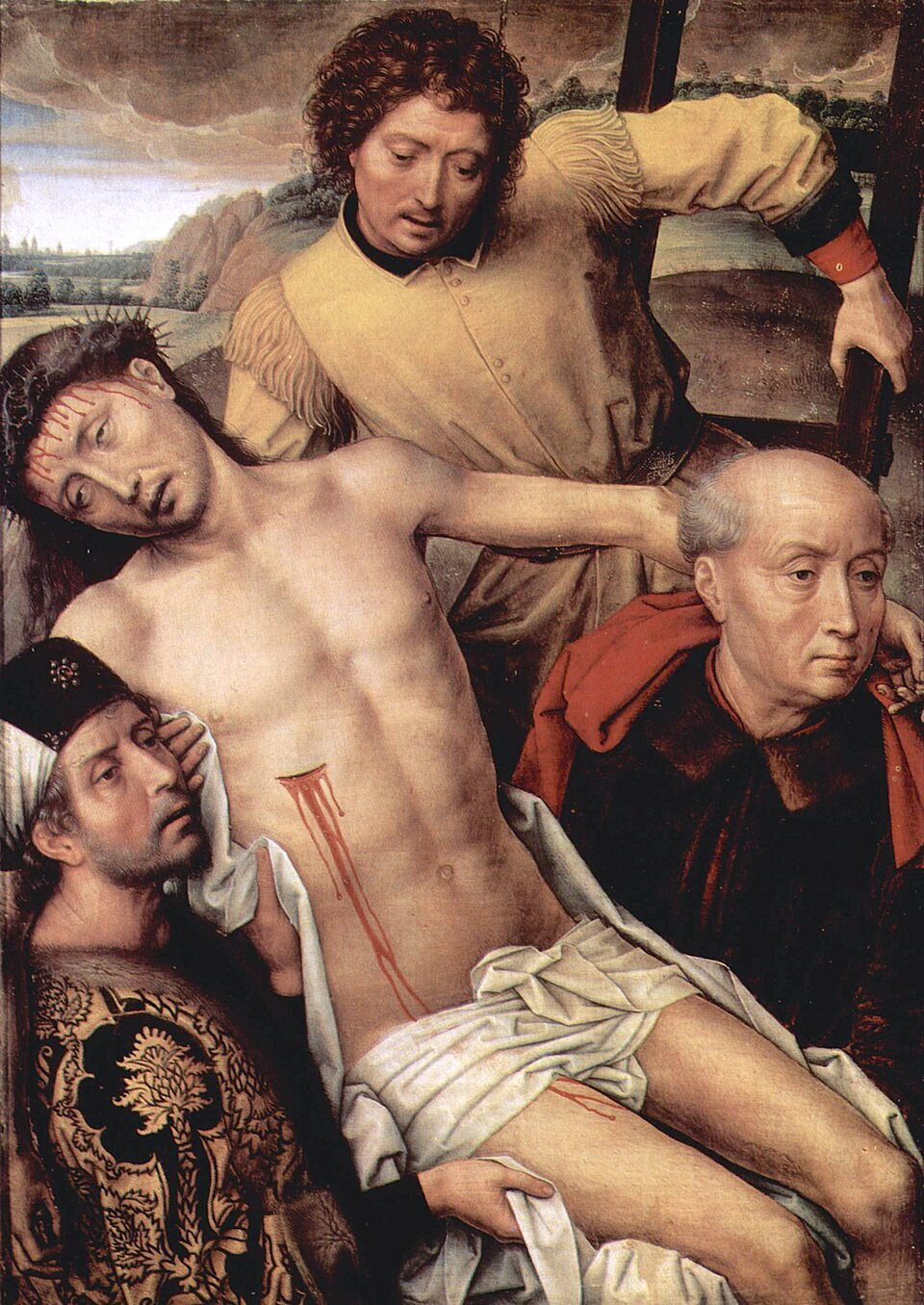
At that time: The Jews (because it was the Parasceve), that the bodies might not remain upon the cross on the Sabbath day (for that was a great Sabbath day) besought Pilate that their legs might be broken, and that they might be taken away. The soldiers therefore came: and they broke the legs of the first, and of the other that was crucified with Him. But after they were come to Jesus, when they saw that He was already dead they did not break His legs. But one of the soldiers with a spear opened His side, and immediately there came out blood and water. And he that saw it hath given testimony: and his testimony is true. And he knoweth that he saith true, that you may believe. For these things were done that the Scripture might be fulfilled: You shall not break a bone of Him. And again another Scripture saith: They shall look on Him whom they pierced.
A Message From St. Ambrose’s Concerning Virgins
And who can now fail to understand that the holy prophet said for our instruction: Every night will I wash my couch and water my bed with my tears (Psa 6:6)? For if you take it literally for his bed, he shows that such abundance of tears should be shed as to wash the bed and water it with tears, the couch of him who is praying, for weeping has to do with the present, rewards with the future, since it is said: Blessed are ye that weep, for ye shall laugh (Luke 6:21); or if we take the word of the prophet as applied to our bodies, we must wash away the offences of the body with tears of penitence. For Solomon made himself a bed of wood from Lebanon, its pillars were of silver, its bottom of gold, its back strewn with gems (Cant 3:6). What is that bed but the fashion of our body? For by gems is set forth the splendour of the brightness of the air, fire is set forth by the gold, water by silver, and earth by wood, of which four elements the human body consists, in which our soul rests, if it do not exist deprived of rest by the roughness of hills or the damp ground, but raised on high, above vices, supported by the wood. For which reason David also says: The Lord will send him help upon his bed of pain (Psa 41:3 LXX). For how can that be a bed of pain which cannot feel pain, and which has no feeling? But the body of pain is like the body of that death, of which it is said: O wretched man that I am, who shall deliver me from the body of this death (Rom 7:24)?
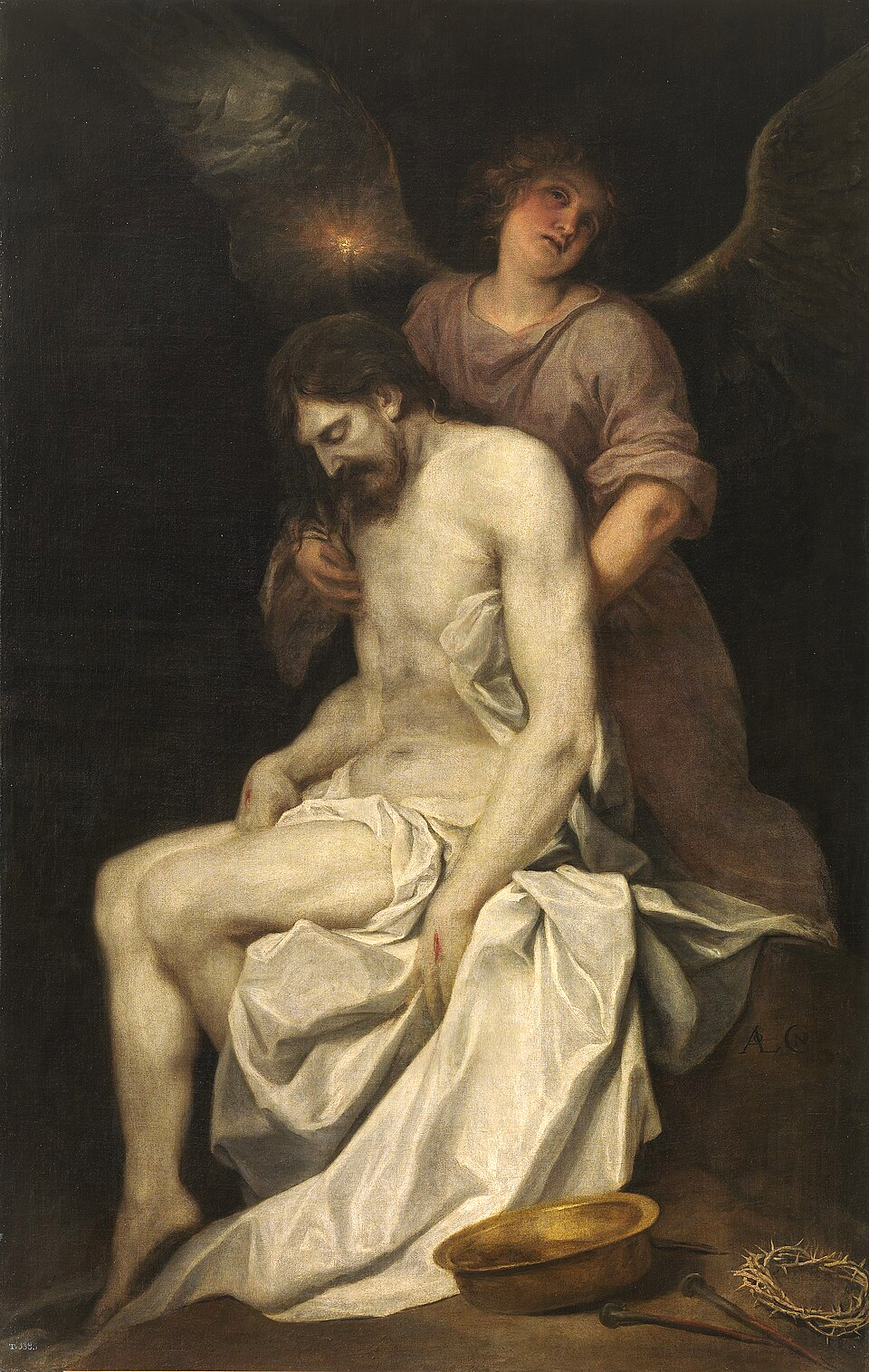
Alonso Cano, cir. 1646-52
And since I have inserted a clause in which mention is made of the Lord’s Body, lest any one should be troubled at reading that the Lord took a body of pain, let him remember that the Lord grieved and wept over the death of Lazarus (John 11:35), and was wounded in His passion, and that from the wound there went forth blood and water (John 19:34), and that He gave up His Spirit. Water for washing, Blood for drink, the Spirit for His rising again. For Christ alone is to us hope, faith, and love—hope in His resurrection, faith in the layer, and love in the sacrament.
And as He took a body of pain, so too He turned His bed in His weakness (Psa 41:3 LXX), for He converted it to the benefit of human flesh. For by His Passion, weakness was ended, and death by His resurrection. And yet you ought to mourn for the world but to rejoice in the Lord, to be sad for penitence but joyful for grace, though, too, the teacher of the Gentiles by a wholesome precept has bidden to weep with them that weep, and to rejoice with them that do rejoice (Rom 12:15).
But let him who desires to solve the whole difficulty of this question have recourse to the same Apostle. Whatsoever ye do, says he, “in word or deed, do all in the Name of our Lord Jesus Christ, giving thanks to God the Father by Him (Col 3:17). Let us then refer all our words and deeds to Christ, Who brought life out of death, and created light out of darkness. For as a sick body is at one time cherished by warmth, at another soothed by cool applications, and the variation of remedies, if carried out according to the direction of the physician, is healthful, but if done in opposition to his orders increases the sickness; so whatever is paid to Christ is a remedy, whatever is done by our own will is harmful.