
Translation of the Epistle for the Eighth Sunday After Pentecost (Rom 8:12-17)
Brethren: We are debtors, not to the flesh, that we should live according to the flesh, for if you live according to the flesh you will die; but if by the spirit you put to death the deeds of the flesh, you will live. For whoever are led by the Spirit of God, they are the sons of God. Now you have not received a spirit of bondage so as to be again in fear, but you have received a spirit of adoption as sons, by virtue of which we cry, Abba! Father! The Spirit Himself gives testimony to our spirit that we are sons of God. But if we are sons, we are heirs also: heirs indeed of God and joint heirs with Christ.
Continuation of the Holy Gospel According to St. Luke (16:1-9)
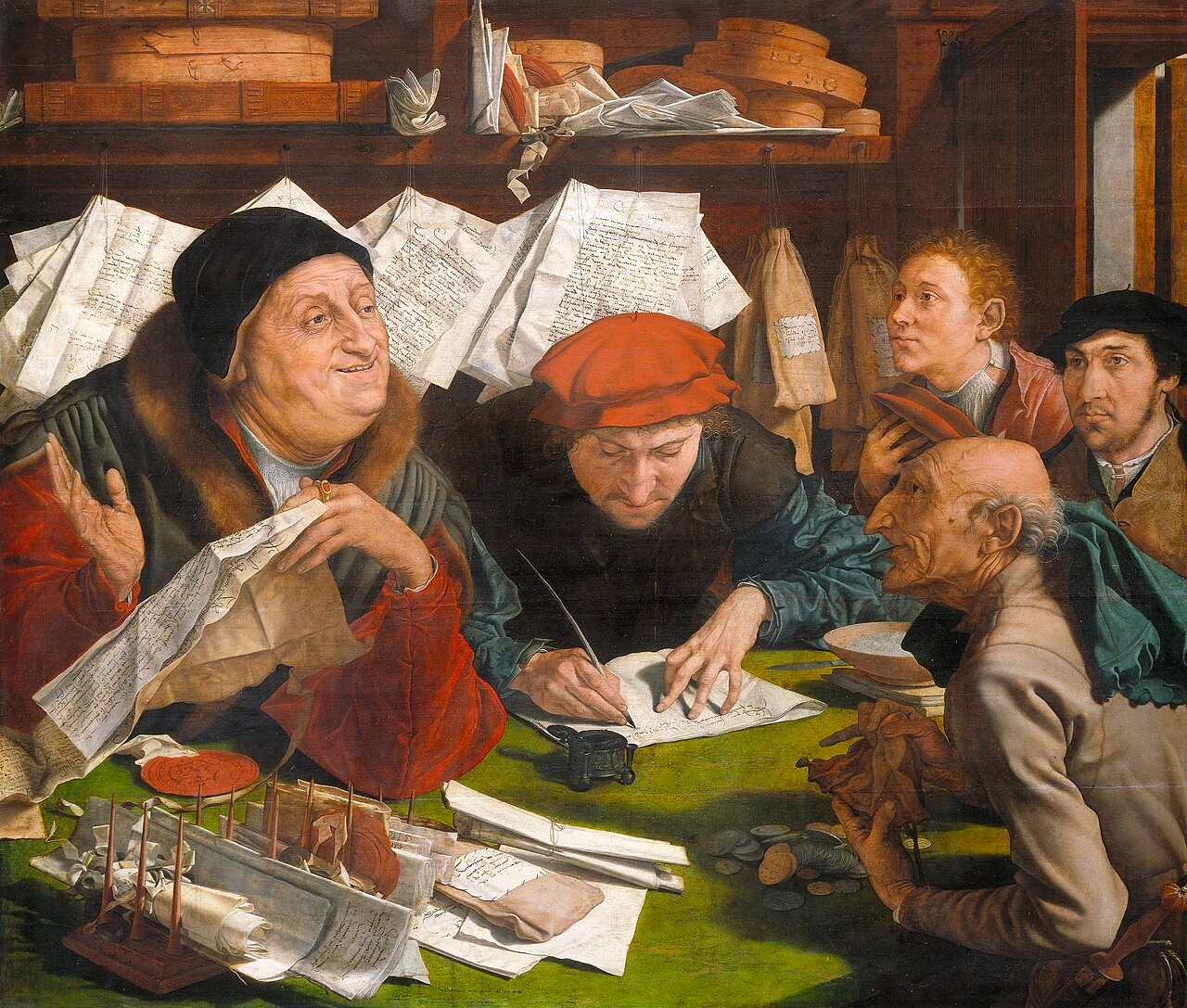
At that time, Jesus spoke to His disciples this parable: There was a certain rich man who had a steward, who was reported to him as squandering his possessions. And he called him and said to him, ‘What is this that I hear of you? Make an accounting of your stewardship, for you can be steward no longer.’ And the steward said within himself, ‘What shall I do, seeing that my master is taking away the stewardship from me? To dig I am not able; to beg I am ashamed. I know what I shall do, that when I am removed from my stewardship they may receive me into their houses.’ And he summoned each of his master’s debtors and said to the first, ‘How much do you owe my master?’ And he said, ‘A hundred jars of oil.’ He said to him, ‘Take your bond and sit down at once and write fifty.’ Then he said to another, ‘How much do you owe?’ He said, ‘A hundred kors of wheat.’ He said to him, ‘Take your bond and write eighty.’ And the master commended the unjust steward, in that he had acted prudently; for the children of this world, in relation to their own generation, are more prudent than the children of the light. And I say to you, make friends for yourselves with the mammon of wickedness, so that when you fail they may receive you into the everlasting dwellings.
For if by the Spirit you put to death the deeds of the flesh, you will live forever.
In the Name of the Father, and of the Son, and the Holy Ghost. Amen.
Transcription of Homily Coming Soon!
In 2008, when Paul Benedict was visiting the United States, he said that priests didn’t speak enough about Heaven, and certainly the Epistle today and the Gospel point us in that direction. And so, I thought we would go over some aspects of Heaven, twenty, namely, but if you want the long version, I recommend you get this book called Everlasting Life by Fr. Réginald Garrigou-Lagrange. And if you’re cheap like me, you can get it for free online. It’s called Everlasting Life. It’s the best book on the subject.
One: What does Heaven consist of? The Beatific Vision. Remember when God told Moses, “No man can see Me and live,” and yet the Blessed souls in Heaven see Him not through image, but they see His essence without imploding. And so, we are equipped with extraordinary, and supernatural, grace in order to survive seeing God. No natural angelic intellect, no natural human intellect is equipped to see God and continue living. We need His help, and He gives it to us in Heaven.
Two: Heaven consists of the perfect possession of God. It’s the complete fulfillment of every rational desire. Now, I’ll underline the word rational because not all of the things that we desire necessarily fit into the divine program. God is possessed immediately as a supreme good. Nothing else remains to be desired. Every natural and supernatural longing finds its fulfilment in this possession of the blessed Trinity.
Three: The Beatific Vision is eternal. There’s absolutely no possibility to lose it. It will not diminish. And the Blessed possess the certainty of eternal happiness with no fear of losing God.
Four: Perfect knowledge. The Blessed know all that pertains to their happiness. They know themselves perfectly in God. They even know each other as one… when one soul in Heaven regards another, he knows everything about that person; knows his name… we don’t need name tags in Heaven. There’s an an absolute knowledge because of this radical union of the Mystical Body as members of Christ. And also the intellect is infused with knowledge to see how everything in this life was woven together into a divine providential plan to get us into Heaven. Even the sins that we confessed, then in our repentance, and our penance work towards His good will. We’ll only understand these things when we see Him as He is; Face to face.
Five: Heaven consists of perfect love. Charity reaches its perfection, and love is uninterrupted. Love of neighbour is purified, so there’s no selfish motive. And every act of charity in Heaven flows from God into the soul as recipient of charity and then as agent of charity. And this is something that we see in the lives of the angels; this is in the lives of the Blessed, that we become recipients and conduits and agents. And so, the more we receive, the more we give. And so, there’s this ever-expansive life of charity in Heaven.
Six: Complete joy. Joy arises from possessing one’s definitive, ultimate, infinite good. And this joy never diminishes. There’s no sadness. There’s no anxiety. There’s no remorse. There’s no disappointment. Every faculty, every sense of the risen body will receive perfect rest in the vision of God.
Seven: It consists of perfect peace. So, there will be no more conflict between intellect and will, between the passions. Paul says, “The good I know, I don’t do, and the evil I don’t want to do, I end up doing.” There’s none of this internal self-imposed schizophrenia that we experience when our intellect and our willing are going in opposite directions and our passions in quite a different one. There is an absolute integration, reintegration, and cohesion of the person. And all of the senses, all of the faculties, then are rightly ordered towards God. And this peace is not only internal, it’s also communal. There’s no jealousy, there’s no envy.
Eight: In Heaven there is a freedom from evil. What is evil? Evil has no substance. And so, if it’s a privation, this is a privation of a privation. So, there is no evil, there is no sin possible, no temptation possible, no suffering, no death, no ignorance, no error, nor disorder.
Nine: The Communion of Saints. The Blessed live in perfect charity toward one another. Every person’s glory increases the joy of the other and of everyone else. And when you regard the glory of the soul in another, it brings you joy. And if that person is far beyond you in terms of holiness and degree of beatitude, that won’t bring about any envy, but rather you’ll glorify God all the more and rejoice in this reflection of God in that soul. Every saint reflects some aspect of God’s holiness and God’s goodness, and each one to a differing degree. There are no two equals.
Ten: The Society of Angels. We will join the angels in the worship that they’ve been at for a long time, and we don’t become angels. Our souls, our bodies, human nature is not angelic nature. And so, we, unlike It’s a Wonderful Life and bad theology in American television, we do not become angels after our death. We retain our nature. Our nature is human nature. When the soul is separated from the body, that’s an imperfection of the nature. And so, this also behooves, requires, demands the reunification of body and soul in the eschaton. And so, the souls that are in Heaven right now are perfectly happy, but they’re still in an imperfect state because their bodies have not been rejoined to them. Angels have no bodies. There’s a strict hierarchy. So, the souls that go to Heaven take the places of those angels that rebelled and fell. That’s also why demons hate us so much, because we’re going to take their places in this strict hierarchy of non-equals.
Eleven: The degrees of glory. Since everyone is perfectly happy, but every soul has a different capacity, there are no equals. And that’s not a problem. Our egalitarian society doesn’t like hearing this, but this is a fact. There’s a strict hierarchy in Heaven, and no two are equal. Lesser glory does not produce jealousy. Each soul is completely full according to its capacity, and we’ll talk a little later about how to increase our capacity for beatitude.
Twelve: Christ remains the centre of Heaven, so Christ retains His Sacred humanity in Heaven. He didn’t leave His Body; we don’t have a tomb of Christ where we go visit His Body, okay? His Body is in Heaven, and He will retain His Sacred Humanity forever. And Christ, as in His Sacred Humanity… His humanity is a created thing, right?, created by the Holy Spirit. That’s still going to be the principal agent of grace through which the Godhead works to distribute grace to us. So, every grace will come through Christ, and we will receive it from Him and bless and praise Him for His charity.
Thirteen: The Blessed Virgin Mary will retain her queenship even after the eschaton when we have the union of body and soul. She will retain her queenship and her motherhood, but her intercessory role will come to an end because everything will be complete. Everything will be in its proper place after the eschaton when the bodies and the souls of the just are united in Heaven.
Fourteen: Heavenly worship. What is Heavenly worship? Well, we’re in it right now. Our Mass here, our Adoration, our times of mental prayer, these are preparations for Heaven. The quality of charity of affection, of gratitude with which I go to Mass, with which I receive the Eucharist, with which I go to Adoration, the quality of attention I give Our Lord in my prayer, all of that increases my ability to receive Him still more in Heaven. And so, what we’re doing here is preparation for what comes later. And we join the angels in every Mass. We join the Blessed souls in every Mass. And we pray for the souls in Purgatory in every Mass.
Fifteen: Our intellects are not at rest in Heaven in the sense… not in the sense that they’re frenetic or intrusive thoughts, but not at rest in the sense that they’re always actively considering, contemplating the Godhead.
Sixteen: So too our will, and our will is not in a static state. It’s in a state of receptivity of grace and acting on it. And so, it’s an eternal activity of love. Love will continually increase its expression. And this charity will never grow weary. And every act of love is perfectly satisfying and capacitates us for still more. And so, love then becomes the principal occupation of the souls in Heaven.
Seventeen: When we go to Heaven, we don’t lose our personalities; rather they become what they ought to be. There’s a certain restoration in Christ. So we’re not… our individuality is not erased; rather, it’s refined. Then, every saint will manifest its own unique participation in God’s goodness. Our personal vocation will reach the eternal completion.
Eighteen: The resurrection of the body. There are four, if I can remember them, there are four preternatural gifts that the body will receive. Impassability, which means the inability to suffer. There’s also clarity of the bodies. And clarity is how our soul will be revealed through the risen body. And that means that the virtues you live in this life will be manifest in your risen body. Like a soldier who comes back from war with medals on his chest revealing past bravery, our risen bodies will reveal our past virtue in Heaven. This is called clarity. Then there’s agility, and this is how the risen body moves with ease, without any hindrance, without being tired. And then there’s also something called subtlety, and this is how the body moves through solid objects. We see this, for example, on Easter Sunday when Christ walks through the door without knocking or opening, and His resurrected body, His glorified body, simply passes through the wooden door. Well, this is called subtly. And so, those are the four gifts, the preternatural gifts of the risen body.
Nineteen: With regard to time, God is the only eternal thing. Everything else that is created is not eternal. Even the angels, even our souls, they will never cease to exist, but we did have a beginning, and that’s the difference. So we’re always dependent on God, the eternal. And therefore we do not become eternal; rather, we in Heaven we will live in what’s called aevum – A E V U M. This is a participation of creatures in eternity, in God’s eternal now, and we in Heaven we will experience a day that never lasts. So, earthly succession gives way to stable fulfilment. There’s a perpetual freshness without change or boredom.
Twenty: Heaven is the fulfilment of all grace. Grace is called semen gloriae, the seed of grace. When you were baptized, Heaven began for you. If you committed a sin, Heaven began again when you went to Confession. And so, Heaven is already here in and now, in an unseen way. We believe in it through faith, but faith will give way to vision. We hope in it because God made a promise, and this promise has not yet met its fulfilment. And so, hope will give way to completion and possession. The only thing that will remain is charity. In a certain sense, Dante was right, when he said in the inferno, “Abandon hope all ye who enter here.“ You know there was a sign over Hell; we could I guess we could say, “Abandon all hope and faith, all ye who enter Heaven,” because we’re not gonna have any more need for faith, we won’t have any more need for hope because we will possess Him completely. The only thing that will survive is charity.
Now a couple of practical conclusions in light of this
It’s better to die than to lose the life of grace. The life of grace is the most precious treasure we can have, and the way we will increase our participation in beatitude, our the degree of beatitude we’ll have in the eternal life, is through our mental prayer, our Adoration, our loving devotion in reception of the Eucharist, our acts of charity, our self-denial; all of those things don’t leave us the same. They transform us, and they prepare us to possess Our Lord more fully And so, to the degree to which we live this charity now in our sacraments, in our prayer and our virtue, this is what capacitates us to receive Our Lord still more in eternity.
For whoever are led by the Spirit of God, they are the sons of God. Now you have not received a spirit of bondage so as to be again in fear, but you have received a spirit of adoption as sons. The Spirit Himself gives testimony to our spirit that we are sons of God. But if we are sons, we are heirs also: heirs indeed of God and joint heirs with Christ.
In the Name of the Father, and of the Son, and the Holy Ghost. Amen.
~Fr. Ermatinger